
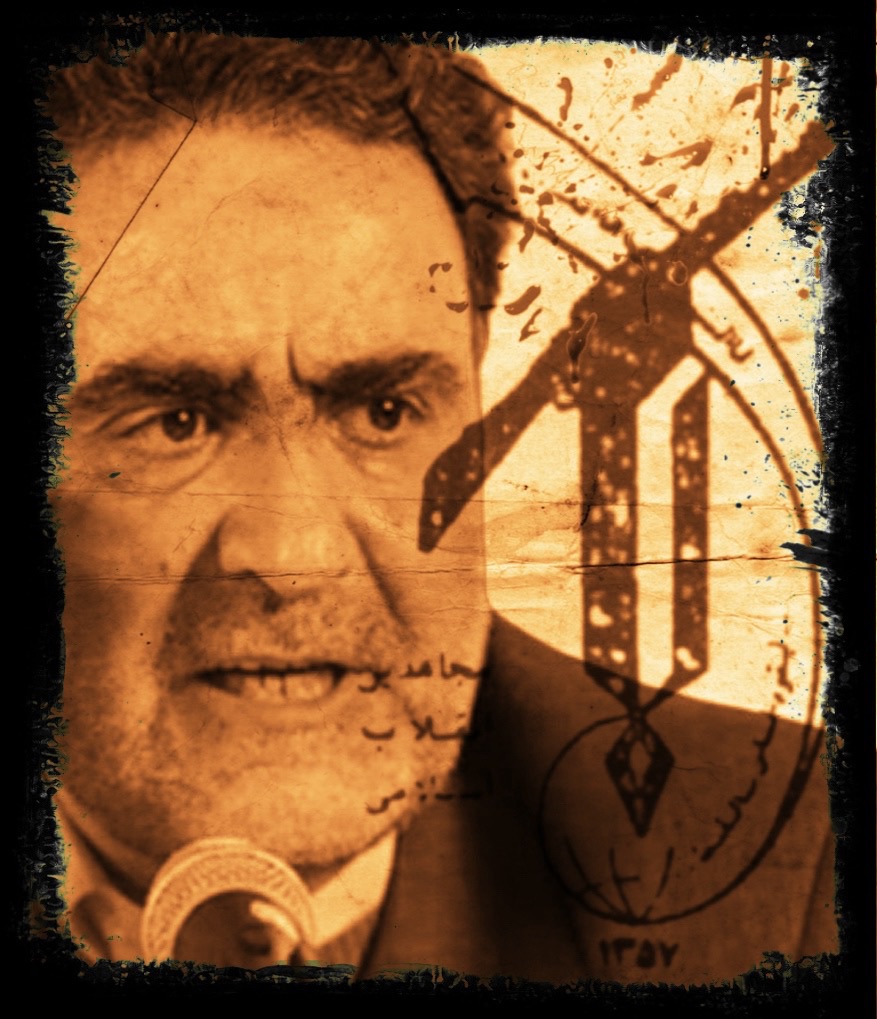
Charlene Savadkouhi
Mustafa Tajzadeh’s life is a complex narrative shaped by a violent and deeply reactionary family background. Coming from a family deeply rooted in religious traditions and closely connected to militant clerics, Tajzadeh was exposed to and influenced by a spectrum of violent political ideologies from an early age. His family’s affiliations ranged from the communist Tudeh to the Islamist-Marxist Mujahidin-e-Khalq (MEK), indicating a predisposition towards violence, terrorism, and criminality within his upbringing.
The communist Tudeh party, with its Marxist-Leninist ideology, advocated for revolutionary change through violent means, viewing armed struggle as a necessary tool to overthrow the existing regime. This ideology likely instilled in Tajzadeh a belief in the use of force to achieve political goals, laying the groundwork for his later involvement in terrorist activities.
Similarly, the Islamist-Marxist MEK promoted a radical blend of Islamism and Marxism, advocating for the violent overthrow of the Iranian government. This ideology, to which Tajzadeh was exposed, likely reinforced his belief in the use of violence as a legitimate means of achieving political change.
During his studies in America funded by the Shah’s government, Tajzadeh, along with associates Hassan Vaezi, Mahmoud Yasini, and Shahab, founded the Falaq terrorist group in 1977. This group engaged in activities against the Shah’s regime, possibly with international support, highlighting Tajzadeh’s early involvement in extremist political activities.
An intriguing aspect of Tajzadeh’s life is the transformation of the Falaq group into one of the earliest formations of the IRGC. This transition underscores the close collaboration between Tajzadeh and Mohsen Sazgara, the founder of the IRGC , shedding light on the complexities of Iran’s political landscape and the intertwining of extremist elements.
Upon his return to Iran, Tajzadeh assumed significant roles within various regime organizations. His involvement in the repression and killings of the 1980s paints a dark picture of his role within the Iranian regime. During that period, Tajzadeh played a significant part in suppressing dissent and eliminating opposition to the government. He was involved in the chain murders and mass executions that targeted political dissidents, intellectuals, and activists who opposed the regime.
Unforgivably, Tajzadeh’s alignment with the regime extended to as recently as 2019, when he stood in support of the regime’s most heinous crimes. During this time, the regime perpetrated a massacre in which over 1500 innocent individuals were killed. Tajzadeh’s continued support for the regime’s brutal actions raises serious questions about his commitment to genuine reform and his moral stance on human rights.
Tajzadeh’s actions during this time demonstrate a callous disregard for human life and a willingness to use extreme measures to silence dissent.
His involvement in these repressive acts highlights his commitment to maintaining the regime’s grip on power at any cost, even if it meant resorting to violence and brutality.
Furthermore, Tajzadeh’s attitude towards those who disagreed with him or the regime was characterized by intolerance and hostility. He showed no hesitation in using violence and repression to crush dissent, displaying a lack of empathy or respect for differing opinions.
Despite his past associations with extremism, Tajzadeh has recently positioned himself as an advocate for social freedoms. However, his past actions with the Falaq group have led to conflicting views, with some regarding him as a former terrorist and others as a current reformist.
Mustafa Tajzadeh’s past, marked by involvement in violent activities and repression, poses a significant challenge when considering his current stance as a reformer. Some argue that his past actions should not be discounted, as they reflect deep-seated ideologies and a willingness to use extreme measures to achieve political goals. These critics argue that Tajzadeh’s past involvement in terrorist activities and repression undermines his credibility as a reformer and raises questions about his true intentions.
On the other hand, supporters of Tajzadeh argue that people can change and evolve over time. They point to his more recent advocacy for social freedoms and his efforts to distance himself from his past extremist activities as evidence of his transformation. They argue that Tajzadeh should be judged based on his current actions and beliefs, rather than solely on his past.
However, it is essential to approach Tajzadeh’s current stance with caution and skepticism. His past actions raise valid concerns about his true motivations and whether his current advocacy for reform is genuine or simply a strategic move to gain political influence. As such, while Tajzadeh’s past should not necessarily condemn him outright, it should be considered carefully when evaluating his credibility as a reformer.
Approaching someone like Mustafa Tajzadeh for an alliance requires a careful and strategic approach, given his complex background and controversial past. Understanding his motivations, building trust, respecting differences, evaluating risks, and maintaining flexibility are key considerations in forming an alliance with him. While his past may raise concerns, his current stance and potential for reform should also be taken into account.
Determining whether Mustafa Tajzadeh is worth the risk of forming an alliance depends on various factors, including the potential benefits and drawbacks of such an alliance. While his involvement could offer political influence, reform potential, and strengthen the opposition, it also poses risks such as reputation damage, trustworthiness concerns, divisiveness, and possible regime backlash. Ultimately, the decision should be based on a thorough evaluation of these factors and a careful consideration of whether the potential benefits outweigh the risks.
The complexity of Tajzadeh’s political affiliations is further compounded by his wife’s familial ties to Mohtashamipour, a key figure in Hezbollah’s founding. This historical background challenges the perception of reformists, highlighting the need for a comprehensive reevaluation of Iran’s political landscape.
In conclusion, to achieve liberation in Iran, it is imperative to confront all aspects of the current regime, past and present. This includes acknowledging and addressing the roles played by individuals like Mustafa Tajzadeh, whose complex history reflects the multifaceted nature of Iran’s political evolution. It is essential to move beyond the Islamist-leftist ideology of 1979 and strive for a more inclusive and democratic future for Iran.


Leave a Reply