
Sepideh Bahrami
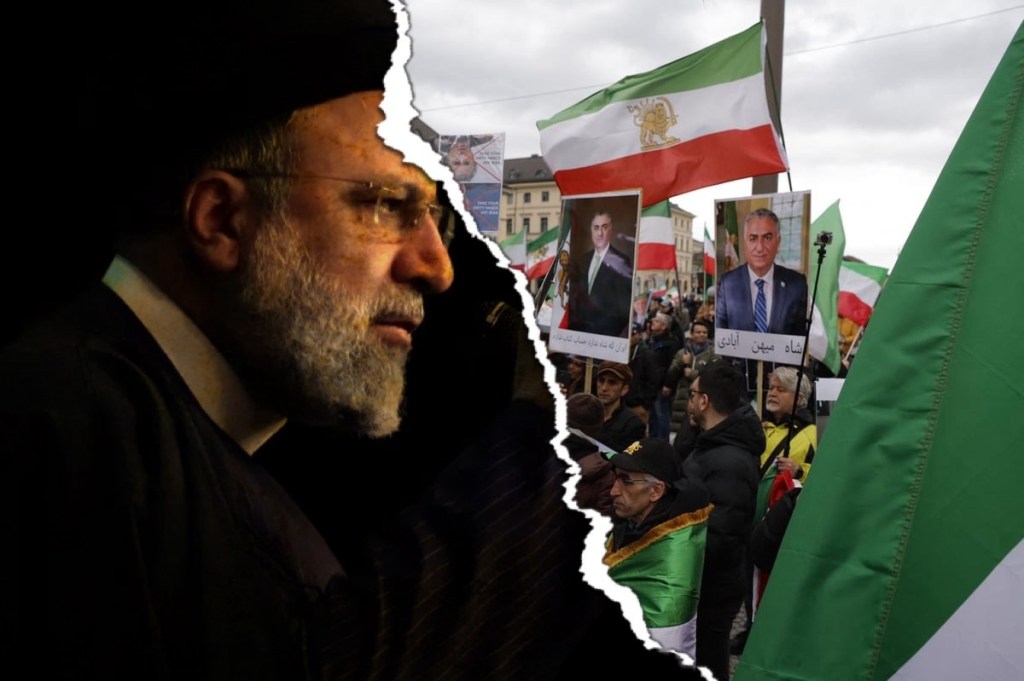
In light of the president of the barbaric Islamic Republic regime, Ebrahim Raisi’s death after a helicopter crash, scrutinizing this situation without conspiracy theories and focusing on factual analysis, reveals rampant corruption and incompetence by the current regime in Iran. It is abundantly clear that the time for change is overdue.
The regime’s failure to procure even a basic necessity such as helicopters over the span of almost five decades is a testament to their ineptitude and disregard for the well-being of the Iranian people. Blaming external factors such as sanctions for their inability to modernize their military equipment is a feeble excuse, especially when considering the regime’s access to alternative options from other countries such as Russia or China.
Furthermore, the regime’s reliance on outdated technology from the Shah’s era (1940) and their inability to effectively deploy drones for surveillance purposes speaks volumes about their isolation and weakness on the global stage. The regime, which purports to possess drones like those sent to Ukraine to harm civilians or those recently failing to respond to Israel, cannot even deploy one to survey their own region and territory. In contrast, they use Turkish drones that control the safest regions, and serve thorr purpose signaling to the world the regime’s weaknesses and corruption.
However, it remains perplexing why the United Nations and some western countries extend condolences to a regime that broadcasts such evident weakness. Why do these countries choose to align with this corrupt regime instead of supporting the people?
Indeed, evidence of the atrocities committed by Raisi from 1980 to the present has been extensively documented by Amnesty International and other human rights organizations. His involvement in severe human rights violations, including the 1988 massacre of political prisoners, is well-documented and condemned globally.
Overview of Raisi’s Atrocities
- 1980s Repression: Raisi played a significant role in the fierce repression of political dissent during the 1980s. His activities during this period include overseeing brutal crackdowns on opposition groups.
- 1988 Massacre: Perhaps the most notorious act attributed to Raisi is his key role in the 1988 massacre, where thousands of political prisoners were executed. As part of the so-called ‘Death Commission,’ he was instrumental in sentencing prisoners to death without fair trials. Amnesty International has consistently referred to these acts as crimes against humanity.
- Continued Human Rights Violations: Raisi’s tenure as the head of Iran’s judiciary saw a continuation of severe human rights abuses. These include:
- Extrajudicial executions: Ongoing reports of extrajudicial executions, detailed by various human rights monitors.
- Torture and Arbitrary Detention: Numerous cases of torture and arbitrary detention of political dissidents and protesters.
- Suppression of Protests: Violent suppression of peaceful protests, resulting in deaths, injuries, and mass arrests.
- 2022 Brutal Crackdown: During the 2022 uprising in Iran, there were reports of brutal crackdowns on protesters. Security forces used excessive force, resulting in numerous deaths, injuries, and widespread detentions. Protesters faced rape, torture, executions, and were often shot in the eyes and blinded. There were also chemical attacks in schools. Families of victims were tortured, imprisoned, laid off work, and silenced, further highlighting Raisi’s ongoing disregard for basic human rights and freedoms.
- Rising Executions: In 2022, the General Assembly requested the Secretary-General to report on the implementation of its resolution at the seventy-seventh session. The Secretary-General’s report on executions and related matters, released on August 31, 2022, highlights a disturbing trend.
- At least 333 executions were carried out in 2021, including at least 17 women.
- At least one person is executed per day in Iran, totaling 251 confirmed executions from January to June 2022. The actual number may be even higher.
Amnesty International has condemned Iran for executing individuals with terrifying speed, describing it as a “shocking attack on the right to life.” Diana Eltahawy, Deputy Director for the Middle East and North Africa at Amnesty International, described it as a mass slaughter and a reprehensible violation of the right to life.
The International Amnesty Organization has called for the prosecution of the new president of Iran for “international crimes” after investigating his key role in the execution of thousands of prisoners in the summer of 1988. Raisi, under Western sanctions for human rights abuses, continues to respond to criticism with accusations of “human rights violations” against his own country.
International Condemnation and Accountability
Amnesty International has extensively documented these atrocities, calling for international accountability:
- Reports and Documentation: Amnesty’s comprehensive reports outline the systematic human rights abuses committed under Raisi’s watch.
- Calls for Prosecution: Amnesty has called for Raisi to be prosecuted for international crimes. His role in the 1988 massacre and ongoing human rights violations presents a clear case for prosecutable offenses under international law.
- Sanctions and Condemnations: Many Western countries impose sanctions and issue statements condemning Raisi’s actions, yet these measures alone haven’t sufficed to bring about justice.
Raisi’s history of atrocities presents an ongoing challenge to global human rights norms. Continued international pressure and advocacy are crucial in seeking justice for victims and holding perpetrators accountable. The evidence compiled by organizations like Amnesty International serves as a vital foundation for these efforts, reminding the world of the urgent need for action.
The international community must not turn a blind eye to these atrocities and must hold the regime accountable for its actions. Western sanctions against Raisi for his human rights abuses are a commendable move, but more needs to be done to ensure justice for the victims and to put an end to the regime’s reign of terror.
In the face of such grave human rights violations and systemic corruption, the people of Iran deserve a better future. The Iranian Shah in Exile Reza Shah II Pahlavi offers a peaceful and viable alternative to the current regime, whose oppressive tactics have only served to prolong the suffering of the Iranian people and a global thread by their act of terrorism! By rallying behind HIH Reza Pahlavi and presenting a united front against the regime, we can pave the way for a brighter and more prosperous future for Iran.
It is time for the international community to stand with the people of Iran in their quest for freedom, democracy, and human rights. The regime’s days are numbered, and the time for change is now. We must continue to shine a light on the regime’s atrocities and support the forces of reform and progress within Iran. Together, we can bring about a new era of hope and prosperity for the Iranian people.


Leave a Reply