
Dan Linnaeus
We are now at a crossroads where a full-scale engagement between Israel and Hezbollah appears inevitable, although it could take some months to break out.
Should this occur, the leadership of the Islamic Republic will be compelled to activate its regional Axis of Resistance and respond aggressively toward both Israel and the United States.
In such a scenario, the United States would be drawn into the conflagration, not only because U.S. forces and interests in the region are directly in the line of fire, but also because it is treaty-bound and obligated to defend its ally, Israel.
There are diplomatic and strategic layers influencing regional actors, aligning with such escalation scenarios. During recent discussions with the Biden administration, several Gulf states expressed their willingness to participate in an all-out conflict against Iranian proxies, under the condition that the conflict is spearheaded by the United States rather than Israel.
If the regime miscalculates the deterrence equation by opting to repeat the attacks of April 14, where it launched 300 drones and missiles from its own sovereign territory at Israel, a rapid series of escalations is likely to ensue.
This scenario may prompt several high-intensity operations against Iranian assets, including its nuclear facilities and drone manufacturing plants, as the U.S. launches a burst of high-intensity campaigns to re-establish deterrence and compel the regime to pause its aggressions.
Gulf states might provide logistical, intelligence, or military support in a coordinated campaign led by the U.S., in alignment with their own unilateral interests in curbing Iranian influence.
The regime would be faced with critical decisions at this crossroads, where Iran’s potential paths amid such a crisis range broadly from strategic retreat and negotiated deconfliction to seeking support from allies like China for mobilization and significant escalation.
This also represents the most precarious fork in the road for the U.S. and its NATO allies in modeling such scenarios. Both China and Russia benefit from protracted U.S. entanglements in the Middle East as they disrupt the American efforts to refocus towards the Indo-Pacific region—where China has significant territorial and economic ambitions—and threaten to dilute U.S. and NATO strategic depth beyond their designed capacity to manage two global fronts—presenting both China and Russia with greater freedom to pursue their objectives in their respective theaters.
Strategically targeted instability in the Middle East further serve Chinese and Russian interests by impeding the India-Middle East-Europe Corridor (IMEC), which poses a competitive threat to China’s Belt and Road Initiative (BRI) and its associated projects like the Iran-Russia International North South Transport Corridor (INSTC).
The U.S. may have assessed that placing such a lever for escalation in the hands of the Iranian regime’s strategic partners is a significant misstep, which would account for the current administration’s months-long hesitation to support Israel’s Gaza operation in Rafah.
However, these strategic dilemmas are not confined to the geopolitical maneuvers between the U.S., NATO, and major Eastern powers but are deeply intertwined with the internal dynamics of Iran itself. Such a series of engagements could dramatically accelerate the decline of the Islamic Republic, with miscalculations posing a significant risk of humiliating the regime domestically.
The capacity for unrest within Iran represents a critical vulnerability for the regime, and presents a dual-risk scenario: it not merely jeopardizes the regime’s stability internally, but also risks disrupting its strategic value in its alliances with China and Russia. Internal instability therefore poses a risk of severely compromising Russian and Chinese objectives in the region, which rely on a stable and cooperative Iranian partner to counterbalance Western influence and expand their own strategic reach.
The will and actions of the Iranian people should be viewed as rising significantly above domestic concerns as a pivotal axis in the geopolitical model, holding the potential to catalyze a collapse of the regime from within and thereby disrupt its usefulness as a lever for eastern powers. Any unraveling of such events is sure to be accompanied by intense campaigns for the political will of the Iranian people as pro-regime actors and their opposition vie for power.
Pro-regime elements will try to leverage the Iranian people’s distrust for foreign support which has deep historical roots but was significantly exacerbated in the 2019 protests. The populace harbors skepticism towards the sincerity and consistency of regional and Western support presenting regime aligned actors with levers to exploit in order to undermine counter-regime efforts. Western powers will need to work diligently to rebuild trust and secure the support of regional stakeholders for the aspirations of the Iranian people for liberty, particularly the cooperation of the actors in the region prone to gray zone activities with respect to Iran.
The Iranian people already recognize the potential agendas of regional powers where for instance, it is widely understood within Iran and the Iranian diaspora that countries like Saudi Arabia and the UAE have complex motivations regarding Iran’s political future. While they may favor a regime change in Iran to diminish Shia influence, their support does not necessarily extend to seeing a strong, unified Iran under a leadership like that which monarchists envision in the Pahlavi family, who in promising a constitutional republic could alter the balance of power in the Persian Gulf in ways that run counter to some unilateral agendas.
The nuanced geopolitical maneuvering of regional players can feed significantly into the Iranian public’s fears of foreign interventions, where support for regime change might be seen not as a push for democracy but as a move to fragment Iran, turning it into a disintegrated state unable to assert its interests. Such a scenario risks protracted civil unrest, as seen in Syria, at the historic expense of the Iranian people.
This raises profound questions about trust: the Iranian people will carefully weigh whether external support for regime change is a genuine backing of their aspirations or a strategy to employ them as pions in extended unrest that sees the installation of a compliant, weakened state serving the interests of its neighbors and other international stakeholders.
A particularly sensitive area of such exploitation is Balkanization. The fragmentation or Balkanization of Iran, is a great concern among many. This has been a part of the regime’s propaganda where they posit the Islamic Revolutionary Guard Corps (IRGC) as the glue that is keeping Iran in one piece. It has also served as their narrative excuse for repressing ethnic minorities within Iran such as the Kurds, Balochs, and Iranian Arabs in Ahvaz more than the rest of the population. A significant dimension of popular resistance to the idea of a federal republic comes from what Iranians view as a license for future secession.
Iran’s relatively young yet risk averse population will cautiously evaluate the risks of participating in any uprising. Pro-regime narratives might paint such uprisings as catastrophic, leading to chaos and fragmentation, whereas opposition forces will need to articulate a clear and stable path to genuine reformation and liberation, emphasizing the feasibility and benefits of a post-regime structured transition that supports the Iranian people’s aspirations and takes careful consideration of the grievances of minorities balanced against respect for Iranian sovereignty and longstanding national identity.
Popular uprisings in Iran have been driven by both ideological and economic motivations in the past. While the regime may claim that sanctions and economic hardships have been imposed by Western powers and that the path to overcoming them must involve defeating U.S. hegemony and fostering a multipolar world order, opposition groups will need to highlight the economic devastation and lack of prosperity caused by the regime, advocating for regime change to restore economic stability and open societal norms. Narratives rooted in empirical data revealing that open societal models enjoys dramatic rises in living standards is suitable to the highly educated youth with Iran and among Iranian diaspora.
Effective support from Western media is crucial in bringing the Iranian struggle to the global forefront. This involves not just coverage, but active engagement in countering the regime’s narratives which enjoy significant representation beyond Iran’s borders with a deeply embedded transcontinental influence network in western institutions. The media must demonstrate its commitment to Iranian aspirations, facilitating a balanced discourse that supports reform and democratization efforts while it also behooves those in places of responsibility within western oversight mechanisms to degrade the regime’s influence networks capabilities.
An unarmed and vulnerable general populace, that faces great challenges in such a series of events, must be fully equipped to withstand the regime’s pressures both in psychological terms and strategic preparedness. Pro-regime elements will seek to frighten the public at every turn, whereas Iranian dissent must stand up symbols of deep national pride and longing for freedom from oppression from a bloody regime that has brought upon its people 45 years of historical injustices and calamity.
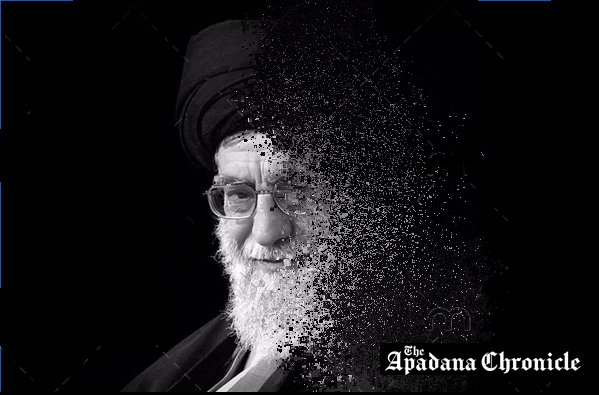
What then are some of the scenarios that could unfold? Is there a scenario where, simultaneously, the citizens of Iran rise up en masse, factions of the military join them, only to see Pahlavi called to step forward to lead and end the crisis? Perhaps, but there are of course many complex scenarios. One scenario on the opposite end of the spectrum involves a hesitant Ayatollah who is toppled by the IRGC and replaced with a figurehead so that they can take a much more militaristic posture.
There is also the prospect of Chinese and Russian support for the Iranian regime and complications introduced by North America and Europe both still heavily reliant on Chinese exports. A failed campaign holds the tail-end risk of sparking a new Cold War between China and the U.S. with Iran as its proxy.
The Iranian people who are unlikely to sit out such historical events present the center of gravity in these models which at the same time complicates the regime’s calculations significantly.
Such a series of events could herald a new era for the Iranian people or lead them into another crushing defeat prolonging their oppression indefinitely. Although many factors need to align for the outcome to be positive, they are more plausible now than ever before. Considerable sacrifices would be inevitable on all sides.
Who is telling this story?
References
The India-Middle East-Europe Economic Corridor (IMEC) is an ambitious transcontinental initiative aimed at enhancing connectivity and economic cooperation between India, the Middle East, and Europe. Announced at the G20 New Delhi summit in 2023, the corridor is intended to provide an alternative to China’s Belt and Road Initiative (BRI) by developing a network of railways, ports, highways, and digital connections.
A Profile of Iranian Influence Initiatives
Iranian diaspora in Germany and their supporters have leveled heavy criticism of Azadeh Zamirirad for airing views they widely designate as those of “Iran Apologists.” An article published in Auslandsbericht titled “Azadeh Zamirirad: Argumentation Lines for the Mullahs” reflects these criticisms.
Strategic Representation at the Global Security Forum 2024
On the opening day of the Global Security Forum in Doha, May 20, 2024, Ali Vaez, director of the Iran Project at the International Crisis Group (ICG) and Hamid Reza Azizi, Iranian scholar and visiting fellow at the German Institute for International and Security Affairs (SWP) published an analysis for Foreign Policy magazine titled “Why Iran Believes It’s Winning Against Israel.”
How China, Russia and Iran Leverage the Palestinian Issue
China’s involvement in the Middle East has been driven by its strategic interests, including securing energy supplies, expanding its economic influence through the Belt and Road Initiative, and countering U.S. interests in the region and beyond. Supporting Palestine has been a way for China to position itself as a champion of justice and multilateralism while also leveraging the Palestinian issue as a platform to gain influence and undermine the U.S. both domestically and on the world stage while complicating its strategic Asia Pivot.
Glossary
Axis of Resistance
A political alliance of Middle Eastern countries and non-state groups led by Iran. This alliance opposes Western influence and policies in the region and includes entities like Hezbollah in Lebanon, the Houthis in Yemen, the Syrian and Iraqi Axis of Resistance forces and the Assad regime itself in Syria.
Deterrence Equation
A strategic military concept that refers to the balance of power wherein nations maintain enough military capability to prevent hostile actions from adversaries by the threat of retaliatory consequences.
Strategic Retreat and Negotiated Deconfliction
Strategic retreat involves pulling back military forces deliberately as part of a broader military strategy. Negotiated deconfliction refers to the process of engaging in dialogue with the aim to reduce the risk of military conflict and manage disputes through diplomacy.
Geopolitical Maneuvers
Actions taken by countries on the international stage to influence global political and economic conditions to favor their own strategic interests.
Strategic Depth
In contemporary security studies, the concept of strategic depth has expanded to encompass more than just geographic dimensions, now broadly consisting of three dimensions: Geographic Depth, Socioeconomic Depth and Technological or Informational Depth.
Geographic Depth
The traditional understanding, which involves the amount of territory that provides a buffer zone for military maneuvering and absorption of enemy advances, crucial in conventional military engagements where physical space allows for strategic deployments and fallback options.
Socioeconomic Depth
This refers to the resilience provided by a country’s economic systems, infrastructure, and societal structure. A nation with a robust economy, diverse energy sources, strong social cohesion, and reliable infrastructure can better withstand and recover from conflicts. This dimension also considers the internal capacity to maintain or increase industrial production during conflicts, sustain the morale of the populace, and manage internal dissent.
Technological and Informational Depth
With the advent of digital warfare, cyber capabilities, and information dominance, this dimension of strategic depth has become increasingly relevant. It involves the ability to protect and sustain communication and information systems under attack, as well as the capability to disrupt or degrade the enemy’s comparable systems.
Transcontinental Connectivity Initiatives
India-Middle East-Europe Corridor (IMEC)
An economic and transport corridor proposed to enhance connectivity and trade between India, the Middle East, and Europe. This corridor is seen as a strategic alternative to routes dominated by other powers, like China’s Belt and Road Initiative. It was launched in September 2023 at the G20 in New Delhi on the momentum of the Abraham Accords.
Belt and Road Initiative (BRI)
An ambitious infrastructure and economic development project led by China, aiming to enhance global trade and stimulate economic growth across Asia and beyond by developing trade routes reminiscent of the historic Silk Road.
The International North-South Transport Corridor (INSTC)
The INSTC, primarily driven by Russia and Iran, serves to integrate India more closely into the economic and strategic frameworks shaped by BRICS nations. As a multimodal network of ship, rail, and road routes for moving freight between India, Iran, Azerbaijan, Russia, Central Asia, and joins with the BRI in connecting Europe, it aligns with the objectives of enhancing regional connectivity and economic cooperation across the BRICS network.


Leave a Reply