Charlene Savadkouhi
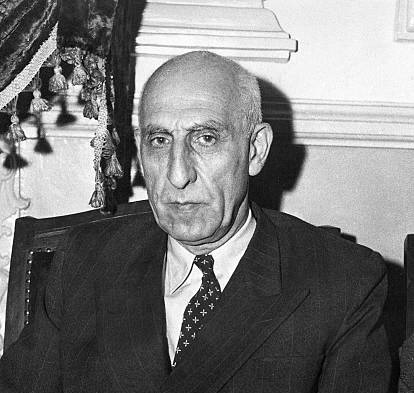
Amidst the labyrinthine archives of Iran’s past, Mohammad Mossadeq emerges as a pivotal figure – revered as a “democratic icon” by some and reviled as a disruptive force by others. His enigmatic legacy shrouds the true essence of his story in layers of complexity and contradiction. It is not merely a duty, but a compelling imperative, for us to unravel the veils of myth and misconception veiling this mysterious persona in a cloak of ambiguity and falsehood.
As we embark on this profound odyssey, we remind ourselves of George Orwell’s warning against the subtle manipulation of history to suit personal and ideolgical narratives. Mossadeq’s intricate story, deeply entangled with Iran’s destiny, demands freedom from external prejudices and foreign influences. While global scholars provide valuable perspectives, the tale of Iran’s history ultimately belongs to its own people, to be written and preserved by their voices.
The reverberations of these misinterpretations reach far and deep, seeping through the collective consciousness and distorting our perspectives. The widespread fallacy of a triumphant CIA coup over a so-called ‘elected’ Mossadeq sows seeds of confusion that flourishes into a dense thicket of misconceptions in Iran. These oversimplifications reduce the intricate tapestry of political complexities to a mere facade, concealing the nuanced interactions of internal strife and external influences that once shaped the course of an entire nation.
As these distortions infiltrate the realms of decision-making and strategic foresight, casting a shadow over foreign relations and policy frameworks, the stakes soar to greater heights. Decisions shaped by flawed historical readings run the perilous course of perpetuating past errors. Clearing these historical impediments is pivotal in forging pathways towards meaningful discourse and enduring resolutions, shedding light on a landscape obscured by the fogs of the past. Only then can we illuminate the path to a future defined by truth before it significantly impacts us in the near future. Believe it or not, Mossadeq’s legacy continues to be relevant, even in the context of nuclear agreements, where this narrative continues to influence US foreign policy.
In the words of Richard Cottam, a sage scholar who bore witness to Iran’s tumultuous journey, the distortions surrounding Mossadegh’s era verge on the grotesque. To unravel this tapestry of deception, we must strive for a more precise, holistic understanding of Iran’s history – one that honors the complexities, confronts the contradictions, and embraces the multiplicity of voices that define its narrative.
The narrative surrounding the events of August 1953 in Iran propagated by many Ivy League scholars enamored with this so-called icon of anti-imperialism and paragon of democracy is rife with significant distortions and inaccuracies. Contrary to the prevailing misconception, the CIA did not engineer a successfulcoup in the conventional sense – the purported coup actually floundered. Mohammad Mossadeq did not ascend to power through a truly democratic electoral process, and the portrayal of the Shah as corrupt during that period is unfounded. Moreover, the idea that the Shah required reinstatement is fallacious since he never formally abdicated his position; rather, he bided his time during Mossadegh’s downfall while in exile.
Peter Theroux, a seasoned Mideast analyst with a distinguished career at the CIA, succinctly encapsulates the reality of what transpired during that crucial period in Iran’s history. He sheds light on the succession of prime ministers under Shah Mohammed Reza’s rule, highlighting the intricacies of governance that belies simplistic labels of coups. The constitutional authority vested in the Shah by the Constitution to appoint and dismiss prime ministers illustrates the legal framework within which these political transitions occurred. As GholamReza Afkhami elucidates, the Crown held exclusive authority over such appointments, a fact reiterated by scholars like George Lenczowski underscoring the Shah’s prerogative in shaping the government
The practice of seeking the Majlis’ approval for ministerial appointments, as alluded to by Afkhami, evolved as a postwar tradition rather than a constitutional mandate. This nuanced understanding of the power dynamics within Iran’s political landscape challenges the mischaracterizations that have clouded historical interpretations. Revisiting these events through a lens of constitutional legality and institutional prerogatives is imperative to correct the record and dispel entrenched fallacies that obscure the truth of Iran’s past. It is incumbent upon scholars and historians, both within Iran and abroad, to approach the country’s history with diligence and nuance, fostering a more accurate, balanced understanding that transcends simplistic narratives of intrigue and intervention.
Mossadegh: A Saga of Ambition and Hubris
Born into privilege and entrenched within Iran’s aristocratic circles, Mossadeq’s lineage intertwined with the complex tapestry of Iranian history, linking him both to the corrupt and bloated remnants of the Qajar dynasty and the emergent forces of modern nationalism. A scion of a once-influential family, his father’s legacy as a Finance Minister under the waning Qajars imbued Mossadeq with a sense of entitlement and ambition that would define his tumultuous path in politics.
While often celebrated as a hero of Iranian nationalism, particularly for spearheading the nationalization of Iran’s oil sector, a deeper historical analysis exposes a more nuanced perspective. Predecessors like Gholamhossein Rahimian had already tabled oil nationalization measures, with Rahimian being the first to propose legislation that received initial approval from the Shah but faced opposition from Mossadeq. He argued that such plans contravened international laws.Mossadeq’s changing stance on oil nationalization was opportunistic, influenced by the growing popularity of the movement within Iran. Successful leadership requires a delicate balance between meeting the immediate demands of the public and safeguarding the long-term interests of the nation. While it is vital to be responsive to the needs of the people, merely adhering to popular sentiment can lead to decisions driven by transient emotions rather than informed judgment and a holistic grasp of complex issues. Mossadeq, unfortunately, failed to embody these characteristics as his focus was primarily centered on advancing his personal agenda and maintaining popularity.
Aligned with powerful landowners and nationalist fervor, Mossadeq charted a course marked by alliances with disparate factions, from the Soviet-backed Iran’s largest communist Tudeh Party to terrorist Shiite leaders, drawing upon a volatile mix of ideologies to bolster his pursuit of power. While lauded for his crusade to nationalize Iran’s oil industry, Mossadeq’s ascendancy to the apex of Iran’s political landscape was fraught with miscalculations and missteps that would unravel the fabric of his grand designs.
Central to Mossadegh’s legacy is the fateful decision to wield the sword of nationalization, a move that reverberated through the corridors of power and reshaped Iran’s economic landscape. Yet, beneath the veneer of nationalist zeal lay a leader driven more by personal ambition than strategic acumen or statesmanship. Mossadegh’s obstinate stance on the oil issue, coupled with his disregard for diplomatic pragmatism, set in motion a chain of events that culminated in his own undoing.
Bayandor, the author of the book “Iran and the CIA: The Fall of Mossadegh Revisited” and having lived having lived during that turbulent era, aptly captures Mossadegh’s enigmatic persona, drawing a portrait of a leader torn between grandeur and shortsightedness. The nationalization of the oil industry, a bold stroke in reclaiming Iran’s sovereignty, stood juxtaposed against Mossadeq’s stubborn refusal to navigate the treacherous waters of realpolitik. His intransigence sowed the seeds of discontent among traditional factions and conservative elements, opening the door to external machinations and internal strife that hastened his political demise.
Shadows of Democracy: Mossadegh’s Appointment in 1950s Iran
During the 1950s in Iran, Mossadegh became prime minister after being appointed by the Shah in line with Article 46 of the Constitution. This took place soon after the Soviet Union’s occupation of Iran from 1941 to 1946, which included the annexation of Iran’s Northwestern region and the establishment of an autonomous republic there. It’s quite puzzling how, despite knowing the dangers to Iran’s territorial integrity post the Soviet Union’s occupation, Mossadegh opted to align himself with the Soviet-backed Communist Tudeh Party in the 1950s when he became prime minister.
Mossadegh’s ascent to the prime minister position was not a product of democratic elections, but rather a strategic move within the confines of a constitutional monarchy with semi-feudal tendencies. The era was marked by entrenched traditional power structures and external influences, rendering the notion of Mossadegh’s “democratically elected” status a superficial and misleading representation of the political climate at the time. His alignment with the Soviet-backed Tudeh Party despite the risks to Iran’s territorial integrity post-Soviet occupation raises questions about his political maneuvers and democratic priorities.
In the 1950s, Iran faced a deficiency in genuine democracy, with women only gaining their voting rights in 1963 and a significant illiteracy rate hindering active citizen participation in governance. The historical backdrop, marked by corruption within the Qajar dynasty and the challenges inherited by the Pahlavi dynasty (notably, the literacy rate was less than 10 percent when Reza Shah, the father of the late Mohammad Reza Shah assumed power in 1925), sheds light on the intricate fabric of governance and leadership in Iran. Mossadeq’s association with aristocratic ties linked to the Qajar dynasty adds layers of complexity to the narrative of democratic principles in his ascent to power.
In hindsight, it becomes evident that Mossadegh’s leadership did not emerge from democratic processes but rather from the intricacies of a politically complex and historically burdened environment. Describing him as a “democratically elected prime minister” is not only inaccurate due to his constitutional appointment, but it also oversimplifies the complex power dynamics and external influences that molded the political landscape in Iran during that period.
Collaboration with the British
Unveiling a shadowy alliance, Mossadegh’s collusive ties with the British, particularly during his governance of the Fars province, reveal a murky chapter in his career. Startling admissions by Mossadegh himself shed light on how his ascension to the role was orchestrated to serve British interests. His own words, “The British wielded full control in appointing me to oversee Fars province,” lay bare the stark reality of British manipulation in dictating his political course.
During his reign as governor, Mossadegh was tasked with quelling rebellions in Tangestan, a hotbed of resistance against British intervention. Chilling accounts from Mossadegh’s recollections detail a directive from Major Hoare, the British Consul in Shiraz, commanding him to crush the Tangestani insurrection per British commands. Mossadeq reluctantly executed these orders, unleashing severe measures on the local populace, solidifying his allegiance with British colonial exploits.
Nepotism
Within the corridors of power, Mossadegh’s tenure as Prime Minister was marred by the stark specter of nepotism. Despite his outward projection as a nationalist crusader for justice, Mossadegh succumbed to the egregious practice of favoritism by appointing numerous family members to pivotal governmental posts. The glaring examples are hard to ignore: his son, Gholamhossein Mossadegh, assumed a role as his political and administrative wing, while another son, Ahmad Mossadegh, was ushered into the position of Deputy Minister of Roads. These flagrant displays of nepotism eclipsed considerations of merit, casting a pall over Mossadegh’s image as a leader supposedly guided by national welfare, not familial ties.
Relationship with the Soviet-backed Tudeh Communist Party of Iran
In a treacherous dance on the political tightrope, Mossadegh’s dalliance with the soviet-backed Iran’s Tudeh’ communist Partyemerges as a disquieting subplot of his rule. Despite his own non-communist stance, Mossadegh strategically exploited the Tudeh Party’s patronage to outmaneuver his internal foes. This Machiavellian bargain, while politically shrewd, raised dire alarms about the specter of communist infiltration in Iran.
The Tudeh Party, a puppet of the Soviet behemoth, commanded a considerable following in Iran, particularly among the disenfranchised masses and intellectual circles. Mossadegh’s calculated proximity to the Tudeh Party, seen as a Trojan horse for Soviet influence, sparked vehement disquiet both domestically and internationally. Detractors posited that Mossadeq’s dalliance with the Tudeh Party signaled a reckless gamble with Iran’s sovereignty and order for immediate political gain.
2. memoirs of Ardeshir Zahedi; Volume One, Ibex Publishers, Maryland, 2006.
1. A Look at the Political Performance of Dr. Mossadegh; Jalal Matini, Ketab Corporation, First Edition, Los Angeles, 2005.
Furthermore, the threads of the Tudeh Party winding through vital governmental and military echelons during Mossadeq’s tenure fueled deep-seated anxieties of a looming communiststranglehold.
Mossadeq’s Embrace of Muslim Causes: Challenging the Secular Portrayal
There have been endless debates among historians and analysts over Mossadeq’s religious beliefs and political leanings! Some insist on painting him as a secular Muslim solely based on his actions and policies, while others dare to suggest that his religious views were just too intricate to be neatly labeled. But let’s not get sidetracked—amidst all this back-and-forth, one bold statement of Mossadeq still shines through: his bizarre claim that the oil in Iran belonged to all Muslims. Now that’s a piece of his legacy that cannot be ignored! This illustrates that he believed in the concept of Ummah (Islamic Nation) as do the current ruling theocrats in Iran.
Anti-Israel Stance and Relations with the Mufti of Palestine
Mossadeq’s foreign policy took a strong anti-Israel stance, aligning him with key anti-Zionist figures in the Middle East. Among these figures was the Grand Mufti of Palestine, Haj Amin al-Husseini, known for vehemently opposing Israel’s creation and collaborating with Axis powers during World War II. Mossadegh found common ground with the Mufti, supporting causes against Israel and even financially backing Hashemi Rafsanjani’s book on Palestine. Rafsanjani, a controversial figure with ties to corrupt practices, went on to become a prominent leader within Iran’s Islamic Republic government.
By not recognizing the state of Israel, Mossadeq aimed to solidify solidarity with Arab and Muslim nations and tap into broader anti-colonial sentiments in the region. While this alignment with the Mufti and anti-Israel policies was strategic in garnering regional support, it complicated Iran’s international relations and added another layer to Mossadeq’s contentious political legacy.
Ties to Fadayeen Islam (Islam self- Sacrificiers); Islamist Terrorist Group
Mossadeq’s association with Fadayeen Islam, a radical Islamist group led by Navvab Safavi known for its violent tactics and extremist views, was also controversial. Fadayeen Islam was behind notable assassinations in Iran, including that of Prime Minister Ali Razmara in 1951. There were allegations that Mossadeq had potentially made deals with the group involving promises to reinstate Sharia Islam in exchange for political assassinations, such as that of Razmara. Notably, Mossadeq’s government released Razmara’s assassin, Khalil Tahmasbi,further raising suspicions.
Interestingly, while Mossadegh did not openly endorse Fadayeen Islam’s violent methods, he indirectly benefited from their actions. The removal of Prime Minister Razmara cleared a significant obstacle for Mossadeq’s political ascent to becoming Prime Minister. Critics view Mossadegh’s failure to decisively address Fadayeen Islam’s activities as indicative of his readiness to exploit extremist elements to further his political objectives. This connection taints his portrayal as a democratic leader and raised doubts about his commitment to upholding the rule of law and political stability in Iran.
Mossadegh’s Betrayal: Democracy Deceived
Mossadeq’s term as Prime Minister of Iran from 1951 to 1953 stands as a grim period marked by deception and the abandonment of democratic values. Portrayed as a populist leader, Mossadegh’s motives were driven by selfish aspirations, showing little regard for true democratic principles.
Despite his professed dedication to democracy, Mossadeq’s rule was fraught with anti-democratic behaviors. Mossadeghmanipulated the political landscape to suit his desires. By tampering with the electoral process, Mossadegh ensured a pro-Mossadegh majority in the Majlis (Iranian Parliament). He postponed the 17th Majlis election in 1952 after filling only 79 seats in regions less supportive of him, effectively skewing the outcome in his favor and demonstrating a blatant disregard for democratic principles.
The dissolution of the Senate, predominantly held by conservatives, and his power consolidation following a 1952 revolt further underscored Mossadeq’s contempt for democratic norms. Viewing himself as above the law, Mossadeq was willing to trample on constitutional safeguards for personal gain.
Mossadeq’s actions not only fell short of upholding democracy but actively eroded it. His legacy is one of deceit and disloyalty, serving as a cautionary tale against unwavering trust in charismatic leaders who prioritize their own ambitions over the well-being of their nation.
Mossadeq’s Slide into Authoritarianism and Abuse of Emergency Powers
In 1952, amidst escalating political unrest and economic upheaval triggered by his rushed and misguided oil nationalization efforts, Mossadeq turned to the Majlis for special powers to address the crisis. Recognizing the necessity for swift action, the Majlis granted him these powers for a six-month period. This initial grant was a reaction to the critical need to stabilize the economy and assert Iran’s control over its resources.
Subsequently, Mossadegh increasingly relied on decrees and emergency measures to bypass parliamentary opposition. In early 1953, seeking an extension of these emergency powers, Mossadeq faced pushback from conservative factions within the Majlis and the royal court. Despite opposition, his request was granted, extending his extraordinary authority for another year, allowing him to rule by decree. This move undermined the authority of the legislative branch and set a dangerous precedent for executive overreach
However, Mossadeq’s utilization of these extended powers was marred by ineptitude in negotiations with foreign entities and economic mismanagement, leading to a deepening economic crisis. His failure to effectively tackle these challenges fueled internal unrest and external pressures, including a foreign-imposed oil embargo in response to his nationalization drive.
Empowered by the extension, Mossadeq initiated reforms to consolidate his control and address economic woes. These actions included media censorship, opposition suppression, and governmental restructuring. He even imposed martial law to quell dissent. Nonetheless, these measures exacerbated societal divisions and heightened political strife within Iran.
Mossadegh’s dissolution of the Majlis in 1953 serves as a glaring instance of his authoritarian conduct. Confronted with mounting opposition and pressure, he unconstitutionally dissolved the parliament and called for a national referendum to legitimize his actions. The referendum process faced significant controversy, with accusations of fraud and coercion. Voters were presented with separate boxes marked for or against Mossadegh, creating a climate highly susceptible to manipulation and intimidation.
Mossadeq’s Stubborn Stance: A Cautionary Tale of Leadership Hubris
Mossadeq’s leadership style was characterized by an unwavering belief in his moral and political righteousness, coupled with an inability to compromise. This rigid outlook made it challenging for him to build and sustain alliances, essential components of effective democratic governance. Such inflexibility manifested in his approach to both domestic and international affairs.
Within Iran, Mossadeq’s unwillingness to engage in negotiations or find common ground with political adversaries, including the Shah and various factions, isolated potential partners and heightened political rifts. On the global stage, his stubborn stance during talks with the British concerning oil nationalization resulted in a lengthy crisis that crippled Iran’s economy. While his defiance against British influence was commendable, his failure to reach a practical resolution that balanced national pride with economic stability proved detrimental to Iran’s immediate needs.
Mossadeq: The Ambitious Qajar Prince and his Dynastic Ambitions
Mossadeq’s background as a disenchanted prince from the ousted Qajar dynasty significantly influenced his political aspirations. After the Qajars lost power to the Pahlavi dynasty, Mossadeq harbored deep animosity towards the new ruling family. His personal grudge against the Pahlavis often took precedence over his political strategies, compelling him to exploit nationalist fervor as a means to gain popular backing.
At that time, Mossadeq’s mistrust extended to all, including the Shah. He may have attributed the schemes orchestrated against him by the Court Minister Hossein Ala to Mohammad Reza Shah himself. However, his assessment of the Shah’s stance was flawed, given that the Shah had actually supported Mossadeq’s administration against his own inclinations. Historical records confirm this posture, particularly evident during the events leading to Mossadeq’s reinstatement in July 1952. Even as Mossadeq’s rule was nearing its end, he informed American Ambassador Henderson that the Shah had expressed a preference for the U.S. to work with Mossadeq and provide financial assistance to resolve the oil dispute.
In hindsight, the discord between the Shah and Mossadegh foreshadowed trouble for Iran. It remains uncertain whether the turmoil of July 1952 could have averted the subsequent AJAX operation and the events of August 1953. The AJAX plot emerged as a consequence of Mossadeq’s oil policies.
Mossadeq’s strategy also involved allowing the Tudeh Party greater freedom to highlight the potential communist threat to Washington while positioning his government as the sole alternative. Nonetheless, this scare tactic alienated conservative factions and turned traditional clergy against him.
Mossadeq’s Oil Gambit: Power Play or National Betrayal?
Mossadeq strategically embraced the Oil Nationalization movement in 1951, even before assuming the prime minister ship, with the aim of solidifying his power base and undermining the Pahlavi dynasty. Despite presenting himself as a champion of sovereignty, his true agenda was to provoke economic turmoil and international conflict through oil nationalization to weaken the Pahlavi regime.
The resulting economic crisis worsened by the British-led oil embargo, provided Mossadeq a platform to portray himself as Iran’s savior and challenge the ruling dynasty’s legitimacy. Beneath his public facade as a defender of Iranian autonomy lay Mossadeq’s self-serving ambitions, with his policies and actions tailored to advance personal interests rather than the nation’s welfare.
In contrast, the Shah’s definitive achievement of full ownershipof the oil industry through the 1973 Oil Sale and Purchase Agreement starkly contrasts with Mossadegh’s symbolic and politically driven nationalization attempts. This divergence suggests that while Mossadeq’s motives were largely political, it was the Shah who ultimately attained genuine control over Iran’s oil reserves.
Despite issuing a decree to nationalize the oil industry, the AIOC refused to comply with the decree and, with British support, initiated an oil embargo severely affecting Iran’s economy. Mossadegh’s government struggled to control and oversees the nationalized assets effectively. The British-led oil embargo imposed significant restraints on Iran’s oil exports, resulting in dwindling revenue and economic distress. Additionally, the Mossadegh administration grappled with a shortage of technical expertise and resources necessary for the efficient operation of the oil sector, leading to decreased oil production and revenue, exacerbating the economic strain on Iran. Furthermore, Mossadegh’s refusal to negotiate a fair settlement with the British and other Western powers over oil nationalization further undermined his credibility. His all-or-nothing attitude, fueled by personal ambition and political hubris, ultimately backfired and led to economic ruin without achieving genuine nationalization.
Mossadeq’s Legacy: Heroic Facade or Political Betrayal?
In reflection, Mohammad Mossadegh’s legacy remains a topic of heated debate. While his nationalist fervor and initial attempts to safeguard Iran’s resources are commendable, his significant shortcomings in achieving genuine oil nationalization, his authoritarian tendencies, self-centered leadership style, and controversial alliances demand scrutiny. The nationalization of Iran’s oil sector, once viewed as a bold move for sovereignty, was marred by political maneuvering, management failures, strategic missteps, and rigid policies that steered Iran towards economic turmoil.
Mossadeq’s alignment with the Soviet-backed Tudeh Communist Party, his anti-Israel fervor alongside questionable affiliations with the Mufti of Palestine, and connections to extremist groups like Fada’iyan-e Islam raise doubts about his commitment to democratic values and Iran’s autonomy. The partnership with such entities, shortly after the Soviet occupation, sheds light on Mossadeq’s complex political landscape and raises concerns about his overarching priorities.
A holistic evaluation of Mossadegh demands a acknowledgment of his achievements alongside his undeniable flaws. Critics rightly underscore that his actions were predominantly driven by personal ambition and animosity towards the Pahlavi dynasty rather than a genuine dedication to democratic principles or Iran’s prosperity.
In hindsight, Mossadeq’s legacy emerges as one marked by missed opportunities and unrealized promises. His unyielding stance and political hubris resulted in economic upheaval and turbulent instabilities, falling short of achieving authentic oil nationalization. Mossadeq’s story serves as a reminder of the dangers of political expediency and the dire consequences of prioritizing individual aspirations over the collective welfare of the nation.
References
1. A Look at the Political Performance of Dr. Mossadegh; Jalal Matini, Ketab Corporation, First Edition, Los Angeles, 2005.
2. memoirs of Ardeshir Zahedi; Volume One, Ibex Publishers, Maryland, 2006.
3. Dr. Mohammad Mossadegh, An Analysis of a Failure; Ali Mirfetroos, Second Edition, Ketab Corporation, 2008.
4. Three Events and Three Statesmen; Houshang Nahavandi, Ketab Corporation, Los Angeles, 2009.
5. Fifty Years of the Shah’s Reign Diary; Volume Two, Sahil Publishing and Printing Organization.
6. The Collection of Iran’s Oral History Project; Interview with Karim Sanjabi, twelfth volume, Interview Date October 1986.
7. Iranian History Date Book from Constitutionalism to the Islamic Revolution; Negah-e-Goftar Publications, Fifth Edition, 2000.
8. Mossadegh’s Memoirs and Reflections; Scientific Publications, Seventh Edition, Tehran, 1993.
9. The Political Life of Mossadegh in the Context of Iran’s National Movement; Foad Rouhani, Iran’s National Resistance Movement Publications, England, 1987.
10. Shaban Jafari; Homa Sarshar, Naba Publications, Los Angeles. (Taken from Homa Sarshar’s website www.homasarshar.com)
11. Troubled Dream of Oil; Dr. Mossadegh and Iran’s National Movement, Mohammad Ali Mohtadi, Tehran, 1999.
12. Mossadegh’s Trial and Defense; First Session, Excerpt from Kayhan Newspaper, National Library Registration Number 1418 on 14/9/1336.
13. By My Father’s Side; Gholamhossein Mossadegh, Rasaa Cultural Services Institute, Tehran, Second Edition 1990.
14. The Great Mistake: Nationalization of Oil; Ebrahim Safaie, Ketabsara, Tehran, 1992.
15. Political Actors from the Constitutional Revolution to 1978; Mostafa Almoti, Pakaa Publishers, London, 1995.
 The Apadana Telegraph
Leave a comment