
(Translated from the original French)
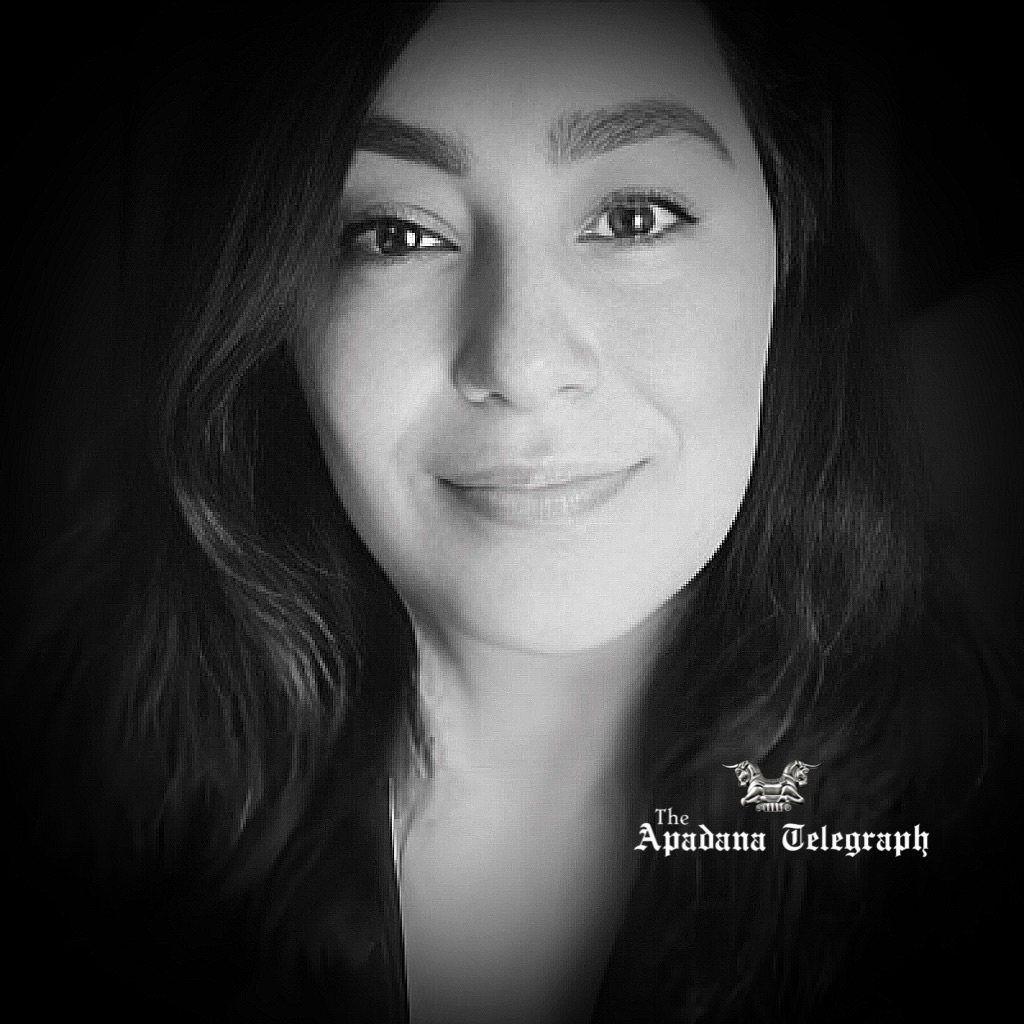
21 News: Maëlie Kate Jalali currently lives in Quebec. A jurist, “Belgian at heart but Iranian by blood,” she comments for 21 News on the situation in her country of origin, which she left in 1986. A testimony without concession against the regime of the mullahs and the cowardice of a certain faction of the Western left.
You are of Iranian origin; how do you perceive the current regime in Iran? It has been shaken by intense protests—has it been weakened?
Maëlie Kate Jalali: Some Iranians, like me, who left Iran at a very young age shortly after the revolution, grew up with the understanding that the clerical regime is neither legal nor normal. Today, as I deepen my research on Iran, I am convinced of this reality and of the complexity of the 1979 events, which are often distorted or misinterpreted. It must be understood that Khomeini’s Islamic revolution was not the result of a popular movement but rather the product of manipulations by various forces, both internal and external. Armed groups trained abroad—especially in Libya and by Yasser Arafat’s PLO—were involved, as well as Marxist, pro-Soviet groups, directly in contact with Moscow. The Shah of Iran called this “the alliance of red and black”—communism and Islamism—which exploited the naïvetéof the population. This unlikely alliance continues to persist today in other forms in the West. There was also a kind of Western interference: Canada and the United States prematurely recognized the Islamic regime, and the Carter administration may have even facilitated the orchestration of the revolution.
Since its inception, the Islamic regime has attempted to construct an image of normality and legitimacy, promoted by certain experts or sympathizers. This is misleading. Iranians are aware of this and have demonstrated their will, at the risk of their lives: to overthrow the Islamic Republic. Thus, the regime has lost all legitimacy and is truly weakened. It is time to state things clearly: the Islamic regime is an occupying force using Iran as a military base and as a platform for launching a Shiite Islamic caliphate. The evidence is clear, notably in the preamble of its constitution—whose validity is contested—which affirms its intention to export the Islamic revolution and create a universal community. But these ambitions are those of the regime, not of Iran.
21 News: How do you view Israel’s strikes on Iran? Could they intensify and provoke a regime change?
MKJ: No one wants to see a war in Iran. The Iranian people, peaceful by nature, yearn for friendly relations with Israel and their Arab neighbors. We also understand that Israel is merely responding to the repeated attacks by the Islamic regime’s proxies and the war initiated by this regime since the October 7 pogrom. The exiled Crown Prince has perfectly described the situation: this is not Iran’s war, but Khamenei’s war. The Islamic regime is and will remain the main responsible party for regional instability and conflicts.
Israel has the right to defend itself, and we have no control over its decisions, but it is also important to emphasize that a military victory alone will not be sufficient. It is essential that Israel seeks a political victory: a free Iran could once again become an “island of stability,” as President Carter stated in 1978, and, due to their historical and cultural ties, become Israel’s ally and strategic partner. Israel’s real political victory would therefore lie in establishing strong relations with a liberated Iran—something that will depend on how the strikes will affect Iran. Israel could strategically create an opportunity for the Iranian people to free Iran themselves, without destabilizing the country.
Ultimately, the ideal political transition would rely on a legal process and the leadership of the exiled Crown Prince Reza Pahlavi at the helm of a democratic, secular, and patriotic movement. His Majesty Reza Pahlavi is the only alternative capable of avoiding a power vacuum, uniting and leading the armed forces under his role as commander-in-chief, as granted by the pre-1979 constitution, and thus make Iran a key actor in regional stability and international cooperation.
21 News: Many women in Iran are fighting against the veil and for their freedoms. Will this movement persist, and does it have a chance of succeeding?
MKJ: Iranian women embody a true symbol of courage. Since 1979, they have started protests againstthe compulsory veil imposed by Khomeini, and they have never stopped. Through these acts of bravery, they demonstrate the resistance of Iranian women to the most visible symbol of misogyny and oppression, which Reza Shah the Great had banned in 1936. The abolition of the veil aimed to liberate women from religious pressures, but also from social and familial constraints, and to support them through law.
The admirable fight of women crushes the religious discourse and the legitimacy of the regime. With this determination, the movement will continue until the liberation of Iran. However, two things must be understood. First, the struggle of women is not limited to the compulsory veil, nor to the choice of whether to wear it or not. The veil is only a consequence of the regime’s domination and the Islamization of Iran. Both women and men in Iran are exhausted; it is the entire Islamic Republic system that is targeted.
Second, despite the significance and strength of this feminist struggle, it cannot alone bring down such a repressive regime. How many more women will have to fall under the blows of the morality police? How many will have to suffer discrimination and oppression under the regime? How many will have to be imprisoned and tortured? This is why it is crucial to eliminate this oppression at its source, and therefore to remove the Islamic Republic from Iran. This requires international support.
21 News: How do you judge the perspective of European feminists, particularly from the left, regarding the uprisings of Iranian women?
MKJ: “Traditional” feminists have supported Iranian women, and I thank them for their solidarity. However, the problem with the Iranian and Western far-left is not new. It’s a phenomenon that we, Iranians, have known well since 1979, as they both contributed to the rise of the Islamists.
The Iranian left, influenced by Marxism, sacrificed the fundamental rights of Iranian women, notably by sabotaging the anti-veil demonstration of March 1979, to achieve its own goals during the Islamic revolution. These rights had been gained under the Pahlavi monarchy, which liberated Iran and its women. Today, the far-left’s attempt to appropriate this struggle by positioning itself as the sole representative of women, while denigrating supporters of a constitutional monarchy, is astonishing.
The Western intellectual left, especially the French, also betrayed both Iranians and the West by supporting an Ayatollah, Khomeini, who ultimately spread obscurantism throughout the world. Let’s mention the article published in Le Monde which stated, even before Khomeini’s rise to power: “We should all, I hope, feel a little Shiite.” Jean-Paul Sartre promoted Khomeini; Yann Richard introduced him to the French people before engaging in a komiteh in Iran—the armed groups, which were in some ways the precursor to the Islamic Revolutionary Guard Corps, sowing terror among the population.
Today, Iranian women sometimes feel misunderstood, and their struggle is distorted by a certain left that has forgotten feminist values. The veil has been normalized, even romanticized, in the media, advertisements, and even academic programs, such as in Brussels. Some female politicians wear the veil when meeting representatives of the Ayatollahs’ regime, and even in some way support its proxies since the Hamas attack. It is difficult to address the issue of the veil and its use in political Islam without being accused of Islamophobia, which is absurd for Iranian women and their lived experience. Especially when the most fervent advocate for a secular Iran, Fatemeh Sepehri, is a veiled, monarchist woman who is languishing in prison without any media coverage.
Ultimately, Iranian women are waging a double battle. The one to free Iran from Islamic rule and prevent this same Islamization from taking place in their adoptivecountry. This battle is more necessary than ever, given the political and social situation in the West.
21 News: How can the Western people help the Iranian people? What should Western leaders do, in your view?
MKJ: Western people can continue to amplify the voice of Iranians who are fighting for their freedom and their right to choose their form of government. But not only for the sake of Iranians. Political Islam has spread globally after the occupation of Iran, and the regional instability caused by the Ayatollah regime impacts massive immigration and international terrorism. Iran’s fate, therefore, has global repercussions, and it must become a global cause.
Western leaders must go beyond mere statements or tweets, cease all negotiations with the regime, and respect the will of the Iranian people. Appeasement policies do not work and will never work with this kind of regime, like the Hitlerian and Soviet regimes. Similarly, Iran needs international support to bring democracy and secularism, for the benefit of all. A regime change policy is therefore essential. The return of President Trump and his firm, effective policy against the regime offers a last chance to achieve this change. However, support does not mean intervention. It’s important to clearly distinguish between these terms. For this transition, support must be given to Crown Prince Reza Pahlavi, who recently extended his hand as a partner in peace, as the legitimate and legal representative of the Iranian people—a first step that Israel has already initiated.
It is now clear that disinformation about the Pahlavi dynasty has been widely spread by the regime, an expert in manipulation, and by the far left. The Pahlavis, friends of the Belgian royal family, represent the glorious past and promising future of Iran. I hope that Belgium, my country of adoption, will be the first European country to become a “partner in peace” in this historic opportunity to liberate Iran and contribute to changing this disastrous global status quo.


Leave a Reply