Excerpt from Policy Exchange
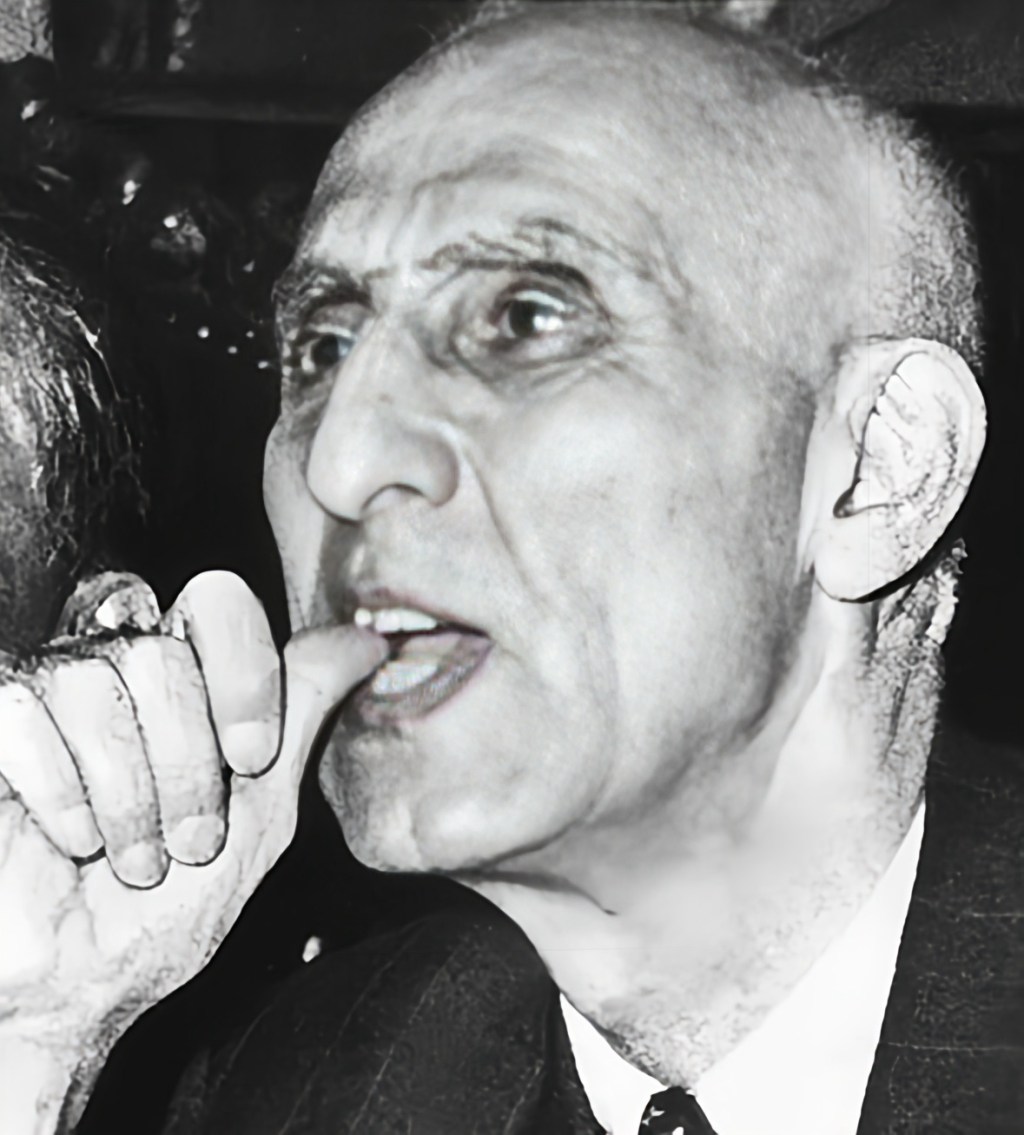
The Islamic Republic regime’s grievance narrative places the UK at its centre. Under this telling, the UK and U.S. deposed the “democratically-elected Prime Minister,” Mohammed Mossadegh, to ensure British access to Iranian oil in an act of singular perfidy. The truth is rather different
In 1951, Iran’s Majlis nationalised the Anglo-Iranian Oil Company (AIOC), legally a British possession, prompting Mohammed Reza Shah to appoint Mossadegh, an aristocratic elder statesman, arch-nationalist, and thorough Anglophobe, as prime minister. Mossadegh, appointed as prime minister in Iran’s factional, elitist political system, was a long-term fixture of Iranian politics, who had previously retired in 1947.
Mossadegh was intransigent throughout US-brokered negotiations, seeking a maximalist arrangement that would provide Iran with all oil revenues from the seized AIOC fields while ensuring Western technical assistance for their operation, and rejecting multiple U.S.-offered compromises. Meanwhile, by 1953, the Iranian economy had collapsed due to an oil embargo and a lack of Western technical assistance.
Iranian domestic politics became increasingly unstable, and the country vulnerable to Soviet influence. The Korean War still raged at the time and, just seven years earlier, the Soviets sought to bite off northwestern Iran through two puppet states, indicating the Kremlin’s designs on the region. Mossadegh’s actions throughout 1952-1953 convinced every centre of Iranian power – the bazari merchants, the aristocratic old politicians, the military, and the clergy with their connections to the countryside – that Mossadegh was a long-term threat to Iran’s prosperity. The military and political figures put out feelers to the U.S. and UK embassies throughout Mossadegh’s premiership, but only in March-June 1953 did the U.S. and UK acquiesce to Iranian-led resistance.
As economic difficulties intensified and Mossadegh’s popularity amongst the Iranian elite and people decreased, he sought to consolidate power. On 3-10 August, Mossadegh held a referendum on the dissolution of parliament, conducted without secret ballots, and on 16 August dissolved parliament.
During a confused four-day period, the Iranian military executed a coup with the UK and US’ backing, but nevertheless as the primary actors in the drama.
The simplistic narrative, that American fear of communism and British perfidy drove Mossadegh from power in 1953, is simply untrue. Cold War geopolitics and energy questions did intersect with Iranian domestic issues to generate the 1953 coup, but it was those domestic factors – and Mossadegh’s fundamental unpopularity – that led to his removal.


Leave a Reply