
Charlene Savadkouhi
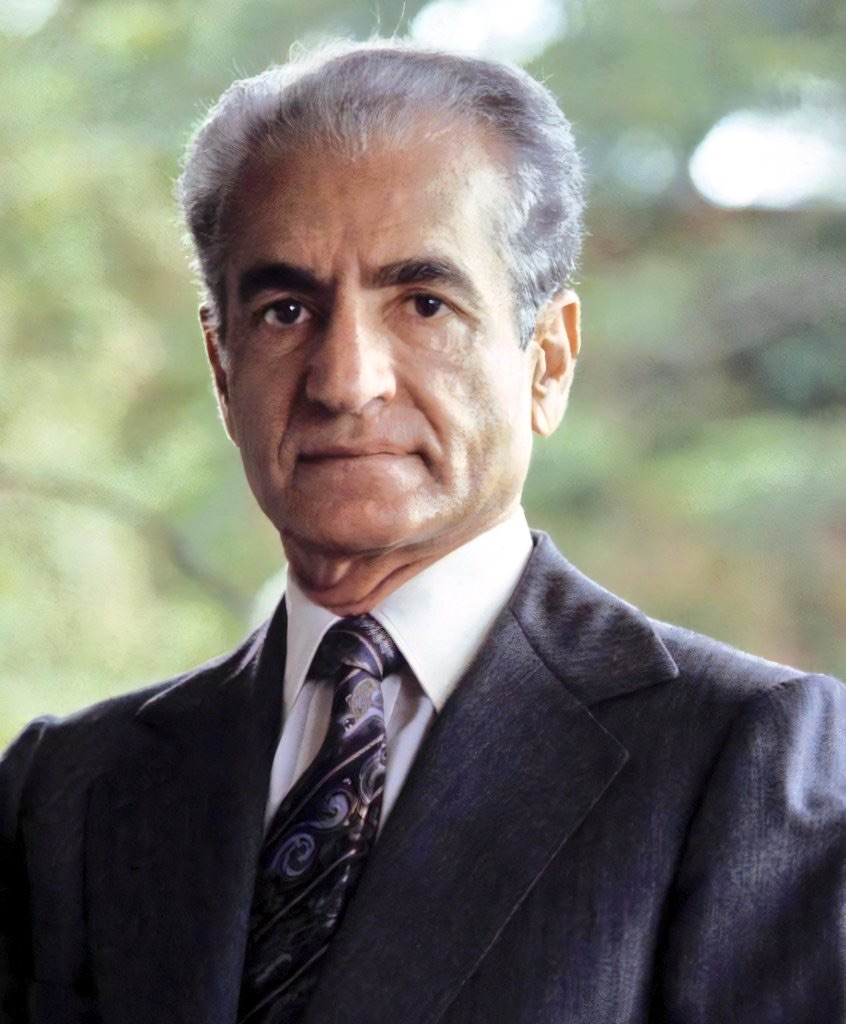
In the tumultuous annals of Iran’s history, few figures loom as large as Mohammad Reza Shah Pahlavi. Once dismissed as a tyrant by ideological revolutionaries and Western media alike, the Shah’s legacy now demands a more nuanced examination—one that transcends the propaganda of the 1979 Revolution and acknowledges the remarkable achievements of his reign.
Today, as Iran struggles under the weight of ideological authoritarianism and economic decay, the question is unavoidable: Was the Shah’s vision for Iran not only correct but tragically ahead of its time?
The Shah’s Vision: A Blueprint for Progress
The Shah’s Iran was a nation on the rise. By the 1970s, it was a regional powerhouse, with one of the fastest-growing economies in the world. Industrialization, land reforms, women’s rights, and universal education were cornerstones of his White Revolution—a bold modernization program that sought to propel Iran into the ranks of advanced nations.
Critics accused him of overreach, but the evidence speaks otherwise. Iran’s literacy rates soared. Women, once relegated to the margins of society, gained the right to vote, to study, and to work. Infrastructure projects reshaped the nation, creating roads, factories, and universities. The Shah envisioned an Iran that was not merely modern in its economy but also confident in its cultural identity, fusing Persian heritage with global progress.
Yet, this rapid modernization was met with fierce opposition from two unlikely allies: Marxists and Islamists. Together, they formed a volatile coalition that weaponized public discontent, often amplified by foreign media and misguided Western policymakers.
The Revolution: A Nation Betrayed
The 1979 Revolution was sold to Iranians as a path to freedom and justice. In reality, it was a coup against progress itself. The promises of liberty and equality were quickly replaced by a regime that institutionalized repression, exported terrorism, and turned Iran into an international pariah.
How did this happen? The revolutionaries capitalized on grievances—some real, many manufactured—and painted the Shah as an autocrat disconnected from his people. Western governments, driven by Cold War anxieties and misguided idealism, abandoned a loyal ally in favor of what they believed was a wave of democratic fervor. Instead, they paved the way for an Islamist theocracy.
In hindsight, the accusations leveled against the Shah—corruption, human rights abuses, and authoritarianism—appear exaggerated, if not entirely fabricated. Yes, the Shah ruled with a firm hand, but in the context of a volatile region and a Cold War-era world, his actions were often a necessity rather than a choice. His alleged “oppression” pales in comparison to the brutality and systemic violence unleashed by the Islamic Republic.
The Shah’s Warnings: A Prophet Ignored
In his final years, the Shah made several prescient observations. He warned of the dangers of radical Islam, not just to Iran but to the world. He spoke of the West’s shortsightedness in supporting ideologies that undermined stability in the Middle East.
His warnings, dismissed as the ramblings of a deposed monarch, have since proven hauntingly accurate. Iran today is a cautionary tale—a country where the promises of the revolution have turned to ash, where poverty and despair fuel widespread discontent, and where the dream of freedom feels as distant as ever.
A Call for Reflection
It is time for Iranians—and the world—to reassess the Shah’s legacy. History has shown that his vision for a modern, prosperous Iran was not only viable but necessary. The monarchy, for all its imperfections, provided stability, progress, and a sense of national identity that has been systematically eroded over the past four decades.
This is not a call to romanticize the past but to learn from it. The Shah’s era was not perfect, but it was a foundation upon which a better future could have been built. The revolution, far from delivering freedom, plunged Iran into an abyss of ideological extremism and international isolation.
As Iranians continue their struggle for liberation, they must consider what kind of future they want to build. The lessons of 1979 are clear: ideologies that promise utopia often deliver tyranny. Perhaps the path forward lies not in revolutionary zeal but in the wisdom of balanced progress, as exemplified by the Shah’s vision.
A Future Worth Fighting For
The Shah once said, “Iran is like a magnificent carpet. Its strength comes from the diversity of its threads.” Today, that carpet lies frayed and tattered, but it is not beyond repair. Rebuilding Iran will require unity, vision, and a rejection of the ideological dogmas that have brought it to the brink.
The Shah’s legacy is more than a memory; it is a roadmap. It reminds us that Iran’s greatness lies not in empty slogans or borrowed ideologies but in its ability to honor its past while embracing the future. In this, perhaps, the Shah was not just a monarch but a guide—one whose lessons we can no longer afford to ignore.
 The Apadana Telegraph
Leave a comment