
Simone Derayeh
Nazanin Afshin-Jam’s recent article in Jerusalem post advocating for the creation of an “Iran Transition to Democracy Commission” (ITDC) presents an ambitious yet flawed framework for shifting Iran from the current totalitarian regime to democracy. While her vision of a technocratic, non-partisan commission seems appealing on paper, it disregards the lessons of history, the realities of revolutions, previous failed experiences and the critical need for a respected and unifying leader to guide the transition.
Afshin-Jam cites Afghanistan, Iraq, and other authoritarian regimes as examples of the challenges in democratization, yet her conclusions appear contradictory. She acknowledges that Western interventions in Afghanistan and Iraq failed due to imposed solutions that neglected local contexts, yet proposes a commission heavily reliant on external frameworks. This echoes the exact mistakes of those failed experiments.
Crown Prince Reza Pahlavi, in a speech at the National Conservatism Conference, rightly criticized the West’s resistance to cultural alignment in post-conflict transitions, particularly in Afghanistan, where the exclusion of a monarchical system undermined a structure historically tied to the nation’s identity. Similarly, Iran’s transition cannot rely on imported frameworks devoid of cultural and historical resonance.
History also warns us against coalition-led transitions and their inability to immunize against creation of a totalitarian system. The Soviet Union’s post-revolution coalition, while initially diverse, devolved into one of the most brutal ideological dictatorships under Lenin and Stalin. A similar fate could await Iran if its transition is entrusted to an unwieldy body lacking a clear leader. Coalitions and commissions, by their nature, are prone to infighting, power struggles, and ideological splits, leaving the door open for opportunistic forces to hijack the revolution.
Just last year, the failed experiment of a coalition known as the Georgetown conference is still a vivid recent memory for the Iranian opposition. There was some care taken into choosing personalities, including celebrities, human rights, advocates, and political opposition. The dissolution of that coalition left many Iranians disenchanted and and most have lost hope in such coalitions.
Afshin-Jam’s ITDC model assumes that an impartial body of technocrats can navigate the complexities of revolution and transition without falling victim to the pitfalls of power struggles. However, this idealistic vision ignores the fractured nature of Iran’s opposition. For 45 years, opposition groups have failed to unite due to ideological divides, personal rivalries, and external interference. A commission, no matter how well-intentioned, would inevitably face the same fate.
Furthermore, the ITDC’s proposed structure raises questions about legitimacy and effectiveness. Who selects these technocrats, and how do they claim to represent the aspirations of millions of Iranians on the ground? The Iranian people, weary from decades of suppression, will not entrust their future to a faceless body without a clear and charismatic leader who can rally them toward a common goal.
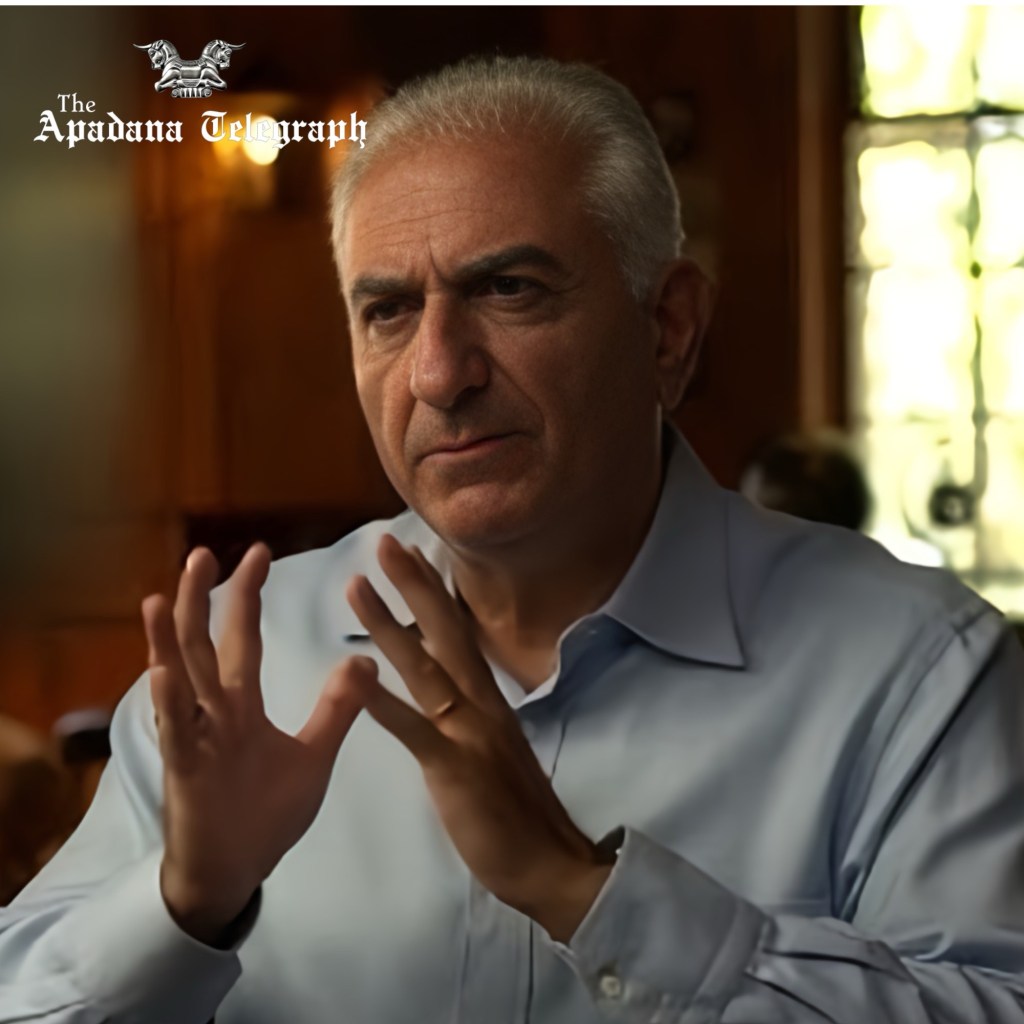
While Afshin-Jam’s proposal seeks a theoretical solution, Iran already has a leader capable of guiding the nation through its transition: Crown Prince Reza Pahlavi. Over decades, the Crown Prince has demonstrated unwavering commitment to democracy, secularism, and national unity. Unlike self-proclaimed opposition figures with limited popular support, Crown Prince Reza Pahlavi commands widespread respect across diverse sectors of Iranian society, from monarchists to republicans.
Responding to the calls of the Iranian people, the Crown Prince has recently taken on a leadership role, committing to oversee the revolution and the transition period up to a free referendum, where the people can decide their form of government. This approach ensures that the future of Iran remains in the hands of its citizens, rather than being dictated by external forces or faceless elite commissions.
His ability to transcend factionalism, coupled with his focus on uniting Iranians under the shared goal of freedom, makes him a uniquely qualified figure for this historic role. His legitimacy stems not from personal ambition but from decades of principled advocacy and an unshakable connection to Iran’s cultural and historical identity.
Afshin-Jam points to the Woman, Life, Freedom movement as evidence of Iranian resilience and readiness for change. Lack of centralized leadership and strategy was the core reason for the ultimate failure of
That uprising underscoring the need for a unifying figure. Without clear leadership, even the most powerful grassroots uprisings can lose momentum, as evidenced by the tragic loss of over 700 lives during the protests, with no significant progress toward regime change.
History shows us that leaderless revolutions are vulnerable to chaos, factionalism, and even the rise of new authoritarian regimes. The Iranian people deserve better than another experiment in coalition-building. They deserve a trusted figure who can provide the stability and vision needed to navigate the perilous transition to democracy.
Afshin-Jam’s ITDC proposal offers an idealistic yet impractical roadmap for Iran’s future. Without a respected leader to anchor the transition, her commission risks becoming another ineffective, theoretical exercise disconnected from the realities on the ground. In contrast, Crown Prince Reza Pahlavi offers a credible, unifying alternative rooted in the will of the Iranian people.
The Crown Prince’s commitment to a referendum ensures that the future of Iran will be decided democratically, not imposed by external actors or elite commissions. His leadership is not just a theoretical possibility but a practical necessity for ensuring an effective transition to democracy.
As Iran stands on the brink of monumental change, it is clear that the path forward cannot rely on faceless commissions or untested coalitions. We cannot play” rotating leadership “ and play musical leader chairs while so much is at risk and so many lives are at stake. A national revolution must be led by a figure who embodies the aspirations of the nation, unites its people, and ensures that their voices are heard. That figure is Crown Prince Reza Pahlavi.


Leave a comment