
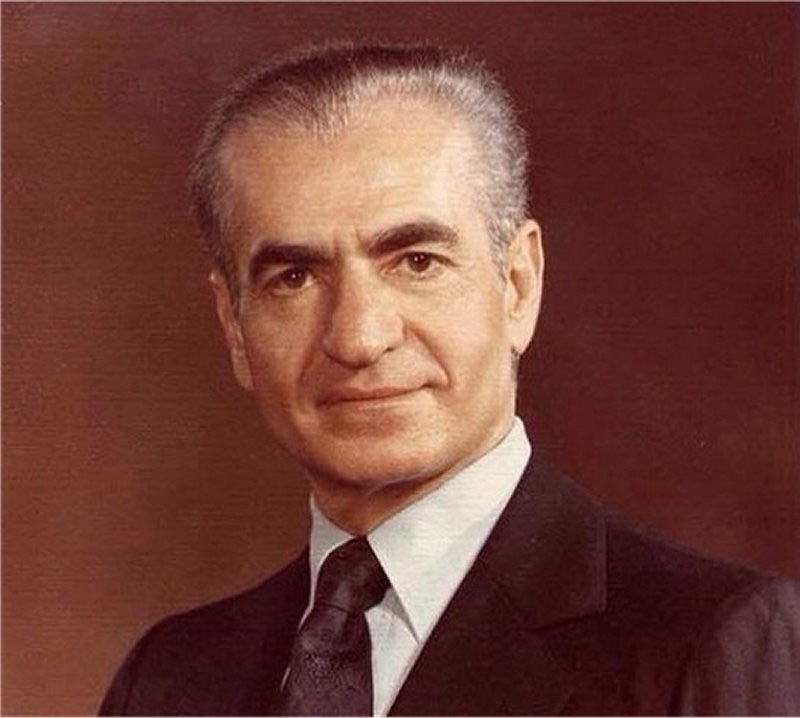
Charlene Savadkouhi
Amnesty International’s 1976 report categorizing the Shah Mohammed Reza Pahlavi’s government among the world’s most repressive regimes had significant repercussions for Iran’s constitutional monarchy. Despite subsequent clarifications revealing inaccuracies, the report’s enduring impact sustained a narrative portraying the Shah as a tyrant deeply ingrained in Western consciousness.
This essay examines the role of Amnesty International’s report in shaping global perceptions of the Shah’s government, particularly in the context of his ambitious oil policies and the alliance between communist and Islamist groups in Iran. It also considers the findings of Scott Cooper and Emad Baghi, which challenge the exaggerated figures often used to vilify the Shah’s government. Additionally, the essay compares human rights violations in the United States and Britain during the same era to provide a broader context for understanding the challenges faced by the Shah’s government.
By exploring these factors, this essay seeks to offer a nuanced perspective on the Shah’s reign and the complexities of governance in a rapidly changing world.
Oil’s Double-Edged Sword: The Shah’s Courageous Stance Against Western Powers
The catalyst for Amnesty’s critical report was the Shah’s ambitious oil policies. Seeking to assert greater control over Iran’s oil resources, he challenged the dominance of Western oil companies. His 1973 Sale and Purchase Agreement nullified the 1954 Consortium Agreement, granting the National Iranian Oil Company complete control over Iranian petroleum. This move, aimed at strengthening Iran’s position, faced resistance from Western powers, especially the United States, due to its threat to their economic interests in the region.
Discontent surrounding the 1954 oil consortium contract and Western oil companies’ dissatisfaction with the Sale and Purchase Agreement fueled tensions. By 1975, Western oil companies demanded renegotiation, signaling a historic shift where oil companies sought to negotiate terms with producing countries.
As the original contract approached expiration in 1979, the Shah proposed new conditions during extension negotiations to prioritize Iran’s national interests amid economic challenges and dissatisfaction with the existing agreement.
The false reporting by Amnesty International and others was influenced by the Shah’s courageous oil policies. Western powers, particularly the United States, supported the narrative of human rights abuses in Iran to advance their strategic interests, including curbing Soviet influence in the region.
The Iranian Communist and Islamist Alliance and Their False Reporting to Westerners
The communist Tudeh Party of Iran and Islamist revolutionaries, led by Ayatollah Khomeini, played significant roles in shaping the narrative against the Shah’s government. The Tudeh Party, with allegiance to the Soviet Union, sought to exploit social and economic grievances to foment revolution. They capitalized on discontent surrounding the Shah’s oil policies and Western influence to garner support in the West, giving Amnesty false, manufactured, and inaccurate reports of Shah’s human rights violations.
On the other hand, Ayatollah Khomeini , an uneducated reactionary , rabidly anti-semitic and medieval emerged as a counterbalance to growing communist sentiment in the country, as well as a voice against the Shah’s progressive policies toward women’s rights. His message resonated with many deeply misogynistic and radical religious groups, particularly those who viewed modernization efforts and perceived secularism and modernity by the Shah as anti-Islam and anti-Sharia laws and also with radical, anti-semitic Islamists who viewed Shah’s recognition of Israel and his government ’s friendly relations with Israel as blasphemous and corrupt.
Khomeini was opportunistically used as a tool by Western countries to curb the rapidly growing communism within the country by creating a religious belt.
The convergence of these two violent movements, though ideologically different, created a powerful alliance against the Shah. The Tudeh Party militant/terrorist communists trained and indoctrinated by KGB and Islamist revolutionaries/terrorists radicalized and trained in Libya, Palestine, and Lebanon found common ground in their opposition to the Shah’s government with the help of Western governments who had the same agenda of toppling the Shah’s government, led to a coalition that ultimately contributed to the constitutional monarchy’s downfall.
Scott Cooper and Emad Baghi’s Investigation on the Number of Executions and Political Prisoners during the Shah’s Government
In “The Fall of Heaven: The Pahlavis and the Final Days of Imperial Iran,” Scott Cooper provides a critical reassessment of the number of political executions during the Shah’s reign. Cooper’s research suggests that the actual number of political executions was likely in the hundreds, rather than the thousands often cited by critics. For example, Emad Baghi, a researcher commissioned by the Islamic Republic of Iran and an insider in the Islamic Republic, conducted an investigative report revealing that the actual number of political executions during the Shah’s reign was likely only 183. This contrasts sharply with the Islamic Republic’s reported execution of over 3,000 dissidents in a single week in July 1988. Baghi’s work challenges the exaggerated figures often used to vilify the Shah’s government.
Comparison to U.S. and British Human Rights Violations
Comparisons can be drawn to human rights violations in the United States during the same era, highlighting the complexities of historical narratives surrounding human rights abuses. In the 1970s, the U.S. witnessed a turbulent period marked by significant human rights violations, particularly against marginalized communities.
The civil rights movement, which aimed to secure equal rights for African Americans, faced violent opposition and systemic discrimination. Instances of police brutality, including the use of excessive force and violence against peaceful protesters, were widespread. The violent repression of civil rights activists, such as the brutal attacks on Freedom Riders and the murders of activists like Medgar Evers, underscored the challenges faced by those fighting for equality.
One of the most infamous incidents during this period was the Kent State massacre in 1970, where National Guard troops opened fire on unarmed college students protesting the Vietnam War, killing four and injuring nine. The massacre sparked outrage and led to widespread condemnation of the U.S. government’s actions.
Furthermore, the U.S. government’s intolerance of communist groups or parties during the Cold War era resulted in widespread violations of civil liberties. The Red Scare, characterized by McCarthyism and the persecution of suspected communists, led to the blacklisting of individuals in the entertainment industry, academia, and government. This atmosphere of fear and suspicion eroded fundamental rights such as freedom of speech and association.
Concurrently, England presided over nearly 20 official colonies worldwide, where citizens endured severe crimes without facing legal consequences.
These instances of human rights violations in the West highlight the complexity of the historical narrative surrounding the Shah’s government. While the Shah’s government faced criticism for its human rights record, particularly regarding political prisoners and the suppression of dissent, it was operating within a global context where similar violations were occurring in Western democracies.
The Shah’s Balancing Acts
While pursuing a policy of secularization, modernization (developing infrastructure being the cornerstone) , and economic diversification in a deeply religious society governed by Sharia laws and the clerics for centuries, the Shah faced numerous challenges. Iran had a low literacy rate, particularly in rural areas, and feudalistic structures persisted, hindering the development of a robust middle class. Additionally, the country had limited infrastructure, which posed further challenges to building a modern economy and society.
Despite these challenges, the Shah embarked on a series of ambitious reforms. The White Revolution, launched in 1963, included land redistribution which alienated the vast majority of clerics who owned huge parcels of land, the extension of voting rights to women and Family Protection Act in Iran which was deemed anti Sharia law and “corrupt”, and the promotion of literacy and secular education. These reforms aimed to modernize Iran’s economy, judicial and educational system, reduce poverty, and create a more equitable distribution of wealth to produce a viable middle class necessary for any sustainable democracy
To accelerate Iran’s development, the Shah implemented industrialization programs and sought foreign investment. These efforts were aimed at diversifying Iran’s economy away from its dependence on oil and creating a strong middle class.
However, the rapid pace of change and the Shah’s close ties to Western powers fueled resentment among traditional religious groups and radical Islamic nationalists. His secularization policies, which limited the influence of Islamic clerics in political, judicial, and social affairs including taking away the judiciary and public education away from them were seen as an attack on Iran’s “Islamic” identity. The benefits of modernization and economic growth (development of infrastructure and creating job opportunities ) could not possibly be even in a country as large as Italy Germany, and France combined and as underdeveloped , leading naturally to disparities between urban and rural areas. This disparity is often by communist critics to minimize Shah’s government achievement disregarding lack of time to develop infrastructure in a vast country like Iran.
Despite these challenges, the Shah’s reforms brought significant improvements to Iran.
The country experienced rapid economic growth, and living standards improved for a significant portion of the population given the short time of his reign.
One of the key elements of the Shah’s strategy was to reduce the influence of Islamist and communist groups. The Tudeh Party, Iran’s communist party, was seen as a threat due to its ties to the Soviet Union. To counter this influence, the Shah implemented policies to weaken the Tudeh Party and other leftist groups. This included crackdowns on Marxists allied with the Soviet Union and the suppression of leftist movements.
As history shows , the Shah’s policies faced significant challenges. The rapid pace of modernization and secularization alienated many radical Islamist groups. His close ties to Western powers also fueled anti-Western sentiment and resentment among treasonous communists and Islamist radicals.
The Shah’s attempts to balance modernization with the preservation of radical Islamist values were complex and insurmountable. While the Shah’s reforms significantly benefited Iran, they also stirred social and political unrest among a population that had been ruled by Sharia laws and educated for generations by reactionary religious clerics. This unrest ultimately paved the way for the regressive and anti-modernity revolution in 1979.
Amnesty International’s 1976 report and the Shah’s oil policies, alongside the influence of the Iranian Communist and Islamist Alliance, played significant roles in shaping the narrative against the Shah’s government. The convergence of these factors contributed to a global perception of the Shah as a tyrant.
The Shah’s attempts to assert Iran’s sovereignty over its resources and balance domestic and international pressures ultimately led to the downfall of his government . Despite his efforts to modernize Iran and reduce the influence of Islamist and communist groups, the rapid pace of change and his close ties to Western powers fueled opposition.
In the end, the Shah’s balancing acts between secularization, modernization, and the preservation of Islamist values proved unsustainable. The complexities of navigating Iran’s historical, religious, and political landscape, coupled with external pressures and internal dissent, culminated in the regressive Islamic Revolution of 1979, reshaping Iran’s trajectory and reverberating globally.
The legacy of the Shah’s reign continues to be a subject of debate and scrutiny, highlighting the complexities of governance and the challenges of balancing competing interests in a rapidly changing world. His story serves as a cautionary tale about the complexities of leadership, the importance of understanding historical contexts, and the enduring impact of decisions made in pursuit of national interests versus Islamic failed-nation building as evidenced by the Islamic Republic in Iran.


Leave a Reply