
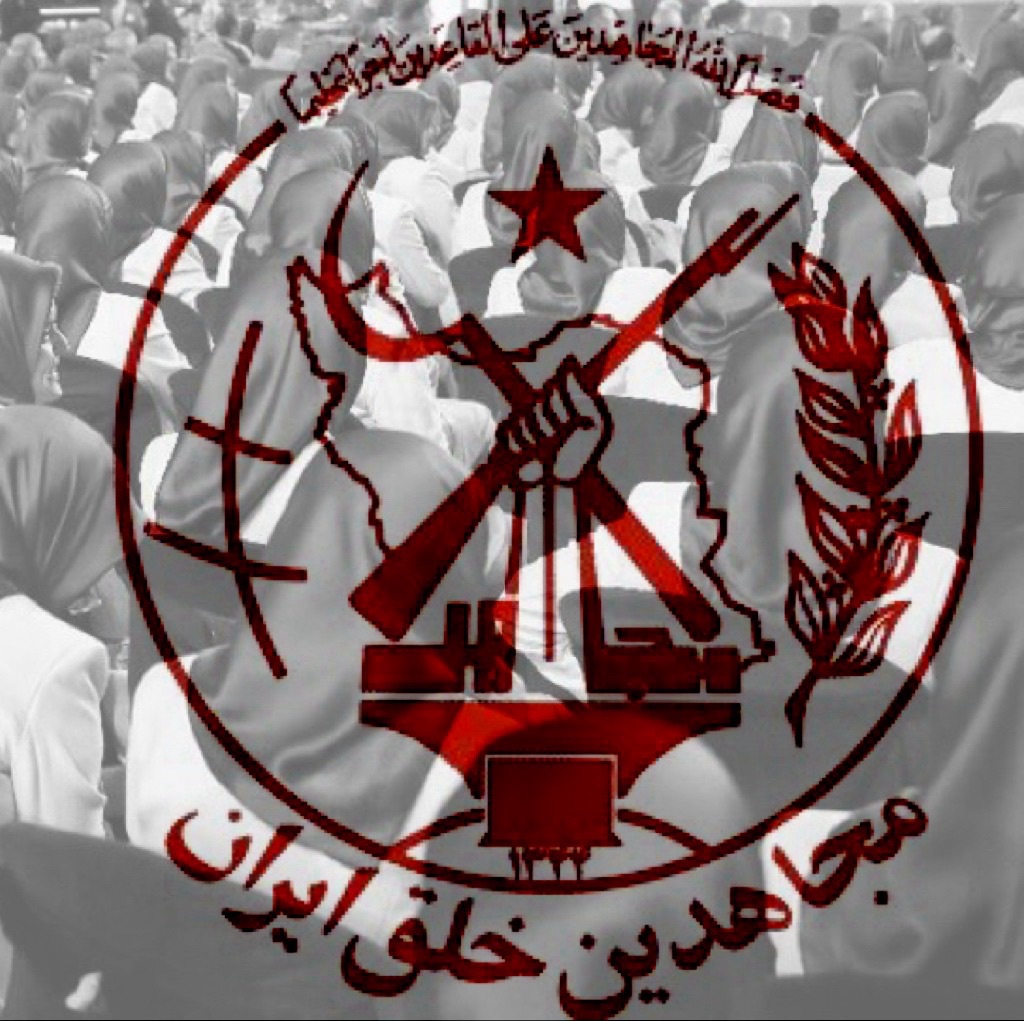
The following is an excerpt from the 2009 RAND Corporation report titled, “The Mujahedin-e-Khalq in Iraq: A Policy Conundrum.”
MeK (Mujahedin-e-Khalq) leaders and supporters vigorously deny that the MeK is a cult. They allege that former MeK members and critics of the MeK are either Iranian agents or their dupes. However, interviews with U.S. military and civilian officials, information voluntarily furnished by former MeK members at the ARC (Ashraf Refugee Camp), and visits to Camp Ashraf suggest that these denials are not credible.
The cult characteristics described in this appendix have been widely reported by former MeK members and by Human Rights Watch. They have also been substantiated, at least in part, by interviews with JIATF (Joint Interagency Task Force)-Ashraf officers and by information volunteered by former MeK members at the ARC.
Authoritarian, Charismatic Leadership
Masoud Rajavi appointed himself and Maryam leader and co-leader of the MeK (and, by extension, of Iran) for life, though the NCRI asserts that it would quickly mount elections upon taking control of Iran. This concept of perpetual leadership is reflected in the MeK chant “Iran-Rajavi, Rajavi-Iran” that has been used since the MeK began its transformation into a cult. Equally reflective of the absolute authority wielded by Rajavi is his informal title Imam-e Hal (the present Imam) used by MeK membership. The egocentric character of Masoud Rajavi’s leadership is also illustrated by his willingness to compare his own marriage to that of the Prophet Muhammad. In addition, the MeK membership ceremony involves swearing an oath of devotion to the Rajavis on the Koran. Pictures of the Rajavis adorn all MeK buildings; banners with their portraits hang in the streets of Camp Ashraf. Criticism of the Rajavi leadership is not allowed. As the MeK newspaper, the Mojahed, declared,
“To understand this great revolution . . . is to understand and gain a deep insight into the greatness of our new leadership, meaning leadership of Masoud and Maryam. It is to believe in them as well as to show ideological and revolutionary obedience of them [sic].”
However, with the commencement of OIF, Masoud Rajavi disappeared. It is unknown whether he is alive or in hiding. Banners announcing his return have appeared from time to time at Camp Ashraf, but Maryam remains the visible leader of the MeK.
Intense Ideological Exploitation and Isolation
The MeK leadership requires members to study MeK ideology and to participate in indoctrination sessions that are characterized by a mix of propaganda and fear tactics. Group members are required to watch films of the Rajavis’ speeches and footage of various street demonstrations throughout Europe. The MeK broadcasts from its own radio and television stations. MeK leaders permit group members to listen only to these stations and to read only internal reports and bulletins, such as the MeK-produced Mojahed newspaper and other approved texts. Violators are punished. To reduce the appearance of brainwashing, MeK leaders describe these restricted activities as opposition to the IRI or as exercises in military theory.
MeK-sponsored media have capitalized on this isolation by instilling MeK members with a sense of fear and paranoia about the outside world, particularly of Iran and the IRI regime. MeK publications often criticize those who fail to show adequate support for the group or who have left it, labeling them as enemies, traitors, and “Iranian agents.” Members who express a desire to watch television or read books not sanctioned by the leadership have often been classified as “difficult.” A visit to the MeK library at Camp Ashraf makes it evident that its purpose is not to expand minds. However, with portraits of American and European writers lining the garden path that leads to the library, the MeK uses the facility to attempt to persuade visitors that the it encourages freedom of thought.
Sexual Control
As a part of the “ideological revolution,” the Rajavis mandated divorce and celibacy. Compulsory divorce required couples to place their wedding rings in a bowl and renounce their affections for one another. (The rules did not apply to the Rajavi marriage, however, nor were MeK leaders required to be celibate.) The MeK denies that these acts were anything but spontaneous and voluntary, claiming, “The reality is that the Mujahideen is based in the territory of a country where . . . family life became impossible” and that every MeK member made the individual, noncompulsory decision to “forgo family life.” This denial is not credible, particularly when taking into account the MeK’s strict limitations on gender interaction, as described next. Furthermore, Iraqi families would likely disagree with this assessment of prospects for family life even during wartime.
Emotional Isolation
In addition to their geographic and ideological isolation, MeK members in Iraq are severely socially and emotionally isolated, even within their communal living arrangements. Relatives and former spouses are placed in different compounds and are not allowed to see each other. Prior to the U.S. invasion of Iraq in 1991, children were sent to live with foster families in Europe, ostensibly to protect them from the impending invasion, though some returned to Iraq years later. Close friendships are considered “liberal relations” and are strictly forbidden. Members may freely communicate only with their unit commanders, and a commander’s permission is required for any other type of communication. Informants monitor conversations among members. In many cases, MeK members’ families in Iran have been told that their relatives had died or been killed.
Despite the MeK’s and NCRI’s (National Council of Resistance of Iran) claim to support gender equality and the placement of women in leadership roles, men and women are kept strictly apart in MeK camps. Housing is segregated by gender, and in other buildings, lines are painted down the middle of hallways, separating them into men’s and women’s sides. Men and women below the leadership level are prohibited from contact with one another unless they have obtained official case-by-case permission. Shaking hands is prohibited across genders. Even the gas station at Camp Ashraf has separate hours for men and women.
Extreme, Degrading Peer Pressure
The MeK holds daily, weekly, and monthly “sessions” that involve forced public confessions aimed at expelling deviant thoughts and behaviors that are believed to undermine group coherence. MeK members are required to keep daily records of their thoughts and nighttime dreams, particularly sexual thoughts and desires (which are, of course, forbidden), as well as observations about their fellow members. They must submit their journals to their supervisors. During large meetings, members often are forced to read their reports aloud and to make self-critical statements. MeK members are often required to admit to sexual thoughts. In a true Catch-22 situation, if they do not, they will be considered to have been caught in a lie because such thoughts are considered inevitable.
Deceptive Recruitment
Prior to its exile, the MeK was the largest group to oppose the Islamic Republic [regime] in Iran (IRI). The organization enjoyed significant support among the young and educated middle class. At the peak of its popularity, it could call hundreds of thousands of protesters into the streets of cities across Iran on minimal notice. Prospective members were attracted to the MeK’s mission, its Marxist-Islamic ideology, and the opportunity to live in coeducational housing and enjoy social debates. However, its ability to recruit was greatly reduced by the IRI’s brutal treatment of MeK members; the group’s departure from Iran, first to France and then to Iraq; and the MeK’s alliance with Saddam, the instigator of the devastating Iran-Iraq War.
By 1987, approximately 7,000 MeK members were in Iraq, which may have included as much as 80 percent of the membership in exile. To add to its numbers, the MeK leadership employed several deceptive recruitment techniques aimed at a range of Iranian subgroups. With the assistance of Saddam’s government, Iranian prisoners from the Iran-Iraq War were offered the choice of remaining in Iraqi prison camps or going to MeK camps where they would have the prospect of repatriation. To recruit potential members still living in Iran, the MeK smuggled family members out of the country to visit relatives at camps in Iraq and then prevented their subsequent departure. Others were victims of fraud in human trafficking: The MeK would arrange for Iranians who paid to be smuggled out of Iran to be redirected to MeK camps in Iraq rather than to their intended destinations.
The MeK also targeted Iranians outside of Iran—for example, economic refugees, people with charitable impulses, and MeK family members abroad. Many were enticed not with promises of an opportunity to fight the IRI, but rather through promises of paid employment as translators, assistance in processing asylum requests, free visits to family members, public-health volunteer opportunities, and even marriage. All “recruits” were brought into Iraq illegally and then required to hand over their identity documents for “safekeeping,” effectively trapping them at MeK compounds.
These findings suggest that many MeK recruits since 1986 were not true volunteers and have been kept at MeK camps in Iraq under duress. As of June 2004, JIATF (Joint Interagency Task Force) estimated that, of the MeK population at Camp Ashraf, only 5 percent had joined prior to the Iranian Revolution and 25 percent had joined at the time of the revolution. A full quarter (approximately 1,500 to 1,800) had been POWs, and 45 percent had arrived at Camp Ashraf after the 1988 move to Iraq. Thus, it is possible that nearly 70 percent of the MeK population may have been recruited through deception and kept at Camp Ashraf against their will.
Forced Labor and Sleep Deprivation
Cults often use long work hours and sleep deprivation as ways to wear down their members and prevent them from identifying with anything other than the group. MeK members often work 16- to 17-hour days and are limited to a few hours’ sleep per night, plus an hour-long nap. To maintain this pace, the MeK leadership mandates continual “makework” construction and beautification projects and, until OIF, ongoing military training. The results are evident at Camp Ashraf. Built out of the desert, the camp has grand avenues lined with trees and is adorned with an exceptional number of parks, fountains, meeting halls, and monuments, many of which glorify MeK martyrs.
Physical Abuse, Imprisonment, and Lack of Exit Options
Former MeK members claim that punishment was frequently meted out for such offenses as
- expressing or fomenting disagreement with the political/military strategy of the MeK
- listening to foreign radio stations
- sharing individual political views with other members
- failing to attend mandatory meetings
- making personal phone calls
- avoiding participation in military drills
- refusing to participate in the compulsory “ideological divorce”
- having sexual thoughts
- communicating with friends or family
- smoking
- asking to leave the MeK
Recent accounts recall that punishment for disagreeing with MeK policies ranged from forced written confessions of disloyalty to incarceration in special facilities at Camp Ashraf. Former members report torture and long periods of solitary confinement as punishment for disloyalty.
To prevent MeK members from departing the camps, almost all MeK recruits were obliged to turn over their identity documents to the MeK for “safekeeping.” The MeK now claims that these documents were securely held until they were destroyed by coalition bombs. Although the group was invited into Iraq and given the use of land by Saddam, the MeK never sought legal residence there. When recruits were brought into the country, Iraqi rules regarding alien visits or immigration were intentionally not observed. With Saddam’s complicity, the MeK leadership was then able to threaten recalcitrant members with prosecution for their illegal presence in Iraq, which would mean incarceration in an Iraqi prison for several years, followed by deportation to Iran, where, members were told, they would face certain persecution. By bringing its members into Iraq illegally and then confiscating their identity documents, the MeK was able to trap them.
Patterns of Suicide
The MeK extols suicide but, unlike jihadist groups, has not used it in attacks since 1981. Prior to their capture in 2003, all MeK members carried cyanide tablets in leather pouches tied around their necks. MeK assassins were instructed to swallow the cyanide if captured during a mission. Masoud Rajavi reputedly has called all MeK members “living martyrs,” and self-immolation is a popular form of MeK suicide. For example, in 2003, there were approximately 10 self-immolations (which killed two) in protest of Maryam Rajavi’s arrest in Paris. The MeK has also used the threat of immolation as a negotiating tool with the JIATF, with British investigators, and with France. Former members indicate that a small number of MeK members committed suicide because they were prevented from leaving the organization and that suicide was also claimed as the cause of death for recalcitrant members who were tortured to death.
Denial of Cultic Tendencies
The MeK and its apologists deny that the MeK is a cult, instead contending that it is a “deeply democratic organization whose guiding principle on all issues is referendum and discussion until a consensus is reached.” The MeK admits to certain practices—such as divorce and celibacy—but justifies them as necessary for effective military operations and claims that they are voluntarily adopted by the membership. However, the MeK denies many other practices attributed to it by it former members, such as intense indoctrination techniques like “thought reform” (commonly referred to as brainwashing) and limiting exit options.
As with all criticism aimed at the group, the MeK blames IRI propaganda for characterizing it as a cult. Certainly, the IRI seeks to discredit the MeK, and this includes publicizing the MeK’s cultic characteristics. It is reasonable to assume that some of the IRI’s allegations are inaccurate. But the fact that the IRI seeks to discredit the MeK does not imply that all of its criticisms are inherently untrustworthy.
The IRI’s campaign has contributed to weakened support for the MeK in Iran. Although it is not currently possible to conduct a scientific survey of Iranians to gauge their opinions about the MeK—and, in the absence of diplomatic or cultural ties, information regarding Iranian perceptions is extremely limited—anecdotal evidence suggests that the MeK’s cultic characteristics have contributed to its decline in popularity since 1981. An American journalist reports that Iranians whom she interviewed likened the MeK to the Khmer Rouge and the Branch Davidian cult in Waco, Texas, comparisons that have also been made by current and former U.S. officials. Of course, as noted earlier, the MeK’s decision to align itself with Saddam against the IRI and to kill Iranian conscripts during the brutal Iran-Iraq War greatly eroded its popular support in Iran. Although the MeK repeatedly claims to be the most influential opposition group in that country, in reality it appears that this once-prominent dissident group can now validly claim only to be highly organized and well (albeit illegally) funded. Indeed, many Iranians observe that, since the MeK’s move to Iraq, the group is the only entity less popular in Iran than the IRI itself.


Leave a Reply