
Charlene Savadkouhi
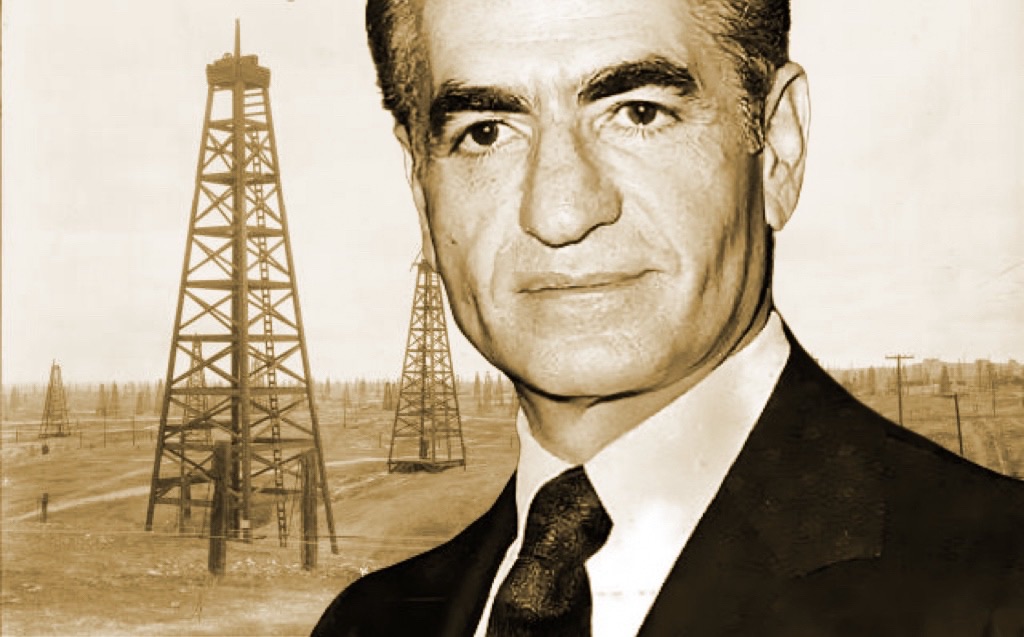
During his reign, Mohammad Reza Shah Pahlavi of Iran sought to assert greater control over Iran’s oil resources, challenging the dominance of Western oil companies. His 1973 Sale and Purchase Agreement nullified the 1954 Consortium Agreement, granting the National Iranian Oil Company complete control over Iranian petroleum. This move aimed to strengthen Iran’s position but faced resistance from Western powers, especially the United States, due to its threat to their economic interests in the region.
Discontent surrounding the 1954 oil consortium contract and Western oil companies’ dissatisfaction with the Sale and Purchase Agreement fueled tensions. By 1975, Western oil companies demanded renegotiation, signaling a historic shift where oil companies sought to negotiate terms with producing countries. As the original contract approached expiration in 1979, the Shah proposed new conditions during extension negotiations to prioritize Iran’s national interests amid economic challenges and dissatisfaction with the existing agreement.
The Role of the Nixon Doctrine
The Nixon doctrine, through its secret deal with Iran, addressed key threats to the world’s oil supply by strengthening Iran’s military capabilities, countering Soviet expansionism, and maintaining stability in the region. The higher oil prices, which enabled U.S. companies to invest in the North Sea, were also instrumental in this strategy. The Nixon doctrine, with its secretive agreement between the Shah of Iran, Richard Nixon, and Henry Kissinger, marked a pivotal juncture in Iranian history, profoundly influencing the nation’s path and its relationship with the Western world. For Iran, this era brought a mix of opportunities and challenges, particularly regarding its oil industry and geopolitical position.
The Shah’s Legacy
Mohammad Reza Shah Pahlavi viewed the Nixon doctrine as a strategy to bolster Iran’s regional stature and fortify its defenses against external threats, especially from the Soviet Union. The clandestine pact allowed Iran to procure advanced U.S. weaponry, including cutting-edge jet fighters and precision smart bombs. These acquisitions were vital for modernizing Iran’s military and enhancing its capabilities, crucial for protecting the nation’s sovereignty and safeguarding its regional interests. An essential benefit for Iran was the ability to influence oil prices through OPEC, as part of the agreement. This brought in substantial revenue to fuel Iran’s ambitious modernization and development programs. The higher oil prices also enabled Iran to invest in its oil sector, enhancing infrastructure and boosting production capacity. This not only bolstered Iran’s economy but also cemented its position as a significant player in the global oil market.
The Nixon doctrine also had broader geopolitical implications for Iran. By aligning closely with the United States, Iran aimed to counterbalance the influence of its regional rivals, particularly Iraq and Saudi Arabia. The partnership with the U.S. empowered Iran to assert dominance in the Persian Gulf region and extend its influence beyond its borders. The doctrine played a vital role in addressing critical threats to the world’s oil supply, particularly through the strategic significance of the Strait of Hormuz. This narrow passage, situated between Oman and Iran, is a pivotal chokepoint through which a substantial portion of the world’s oil flows. Any disruption in this area could have severe repercussions for global oil markets and economies. One of the primary threats mitigated by the Nixon doctrine was the specter of Soviet expansionism and influence in the Middle East. The U.S. perceived Iran, under the Shah’s leadership, as a crucial ally in containing Soviet ambitions in the region. By equipping Iran with advanced weapons, the U.S. aimed to bolster its military capabilities, deterring Soviet aggression, and ensuring the smooth flow of oil through the Persian Gulf.
Showdown at Doha: The Secret Oil Deal That Helped Sink the Shah of Iran
In January 1977, Iran faced a severe economic crisis due to a sudden drop in oil exports and production. This drop was engineered by a US backdoor deal with Saudi Arabia, where Saudi Arabia was asked to challenge an OPEC price increase by selling its petroleum at a reduced price, dealing a grievous blow to Iran’s finances and economy, all designed to topple the Shah’s government. This crisis forced the Iranian government to rewrite its budget, cancel projects, freeze aid programs, and take out a $500 million emergency loan from US and European banks. The government’s attempt to restore fiscal order led to high unemployment and social unrest, creating a volatile pre-revolutionary situation. The Doha deal was part of a broader geopolitical strategy to undermine Iran’s stability and remove the Shah from power. From this perspective, the Doha deal can be seen as a deliberate attempt to create economic chaos in Iran, leading to social unrest and ultimately the downfall of the Shah. The timing of the deal, coming at a time when Iran was already facing economic challenges, lends credence to the idea that it was a calculated move to weaken the Shah’s government. By flooding the market with cheap oil and challenging the OPEC price increase, Saudi Arabia, in collaboration with the United States, sought to destabilize Iran’s economy, which was heavily dependent on oil revenue to create social unrest. This deliberate strategy aimed to weaken the Shah’s government and pave the way for a regime change that would be more amenable to Western interests.
However, the underlying reason for the secret Doha agreement with Saudi Arabia was not merely the Nixon Doctrine and the desire for lower oil prices. The Doha deal was engineered in response to the Shah’s 1973 Sale Purchase Agreement, aimed at disrupting Iran’s newfound control over its oil industry. This agreement granted Iran complete independence from oil companies. The Shah’s bold step challenged the established order where Western oil companies had significant sway over oil-producing countries. The Shah, despite being unjustly portrayed as a Western puppet, demonstrated his independence by nationalizing Iran’s oil industry and asserting its control over its production, pricing, and distribution.
This defiance by the Shah, compounded by his terminal illness and the urgency it created, led to a situation where Iran’s economy became vulnerable. The Shah’s desire to modernize Iran and create a robust middle class was admirable, but the haste with which he pursued these goals, driven by his illness and the desire to secure Iran’s future, ultimately backfired.
The 1973 Sale Purchase Agreement symbolized the Shah’s ambitious vision for Iran’s future and his determination to assert Iran’s independence on the world stage. The Shah’s actions were not solely driven by economic or political motives but also by a desire to secure his legacy. The Shah’s legacy as an independent leader, determined to assert Iran’s sovereignty and economic independence, seems to have been more important to him than even his own survival. Despite facing immense pressure from Western powers and battling terminal cancer, the Shah remained steadfast in his pursuit of Iran’s economic modernization and independence from foreign influence. His refusal to back down and his commitment to his vision ultimately led to his downfall, but it also cemented his legacy as a leader who prioritized his country’s interests above all else.
In conclusion, Mohammad Reza Pahlavi, the Shah of Iran, left a complex legacy marked by his unwavering commitment to Iran’s progress and sovereignty. Despite facing immense challenges and external pressures, he pursued a vision of economic development and modernization, often at odds with Western interests. His decision to nationalize Iran’s oil industry and assert control over its resources exemplified his determination to secure Iran’s future as a regional power.
The Shah’s legacy is one of a leader who prioritized his country’s interests above all else, even at the cost of his own survival. His efforts to modernize Iran and reduce its dependence on foreign powers were driven by a desire to create a prosperous and independent nation. While his reign ended in turmoil and revolution, the Shah’s vision and actions have left a lasting impact on Iran’s history and identity.
1- https://www.sec.gov/Archives/edgar/data/1123647/000119312508230291/dex101.htm
2- https://www.suren-pahlav.com/pdf/showdown_at_Doha-The_Secret_Oil_Deal_That_Helped_Sink_the_Shah_of_Iran.pdf
3- https://www.amazon.com/Century-War-Anglo-American-Politics-World/dp/074532309X
4- https://www.amazon.com/Oil-Kings-Arabia-Changed-Balance/dp/1439155186
5- http://www.petromuseum.ir/content/32/Editorial/4674/The-Day-Iranian-Oil-Really-Became-National
6- https://history.state.gov/historicaldocuments/frus1952-54v10/d449


Leave a Reply