Reza Behrouz
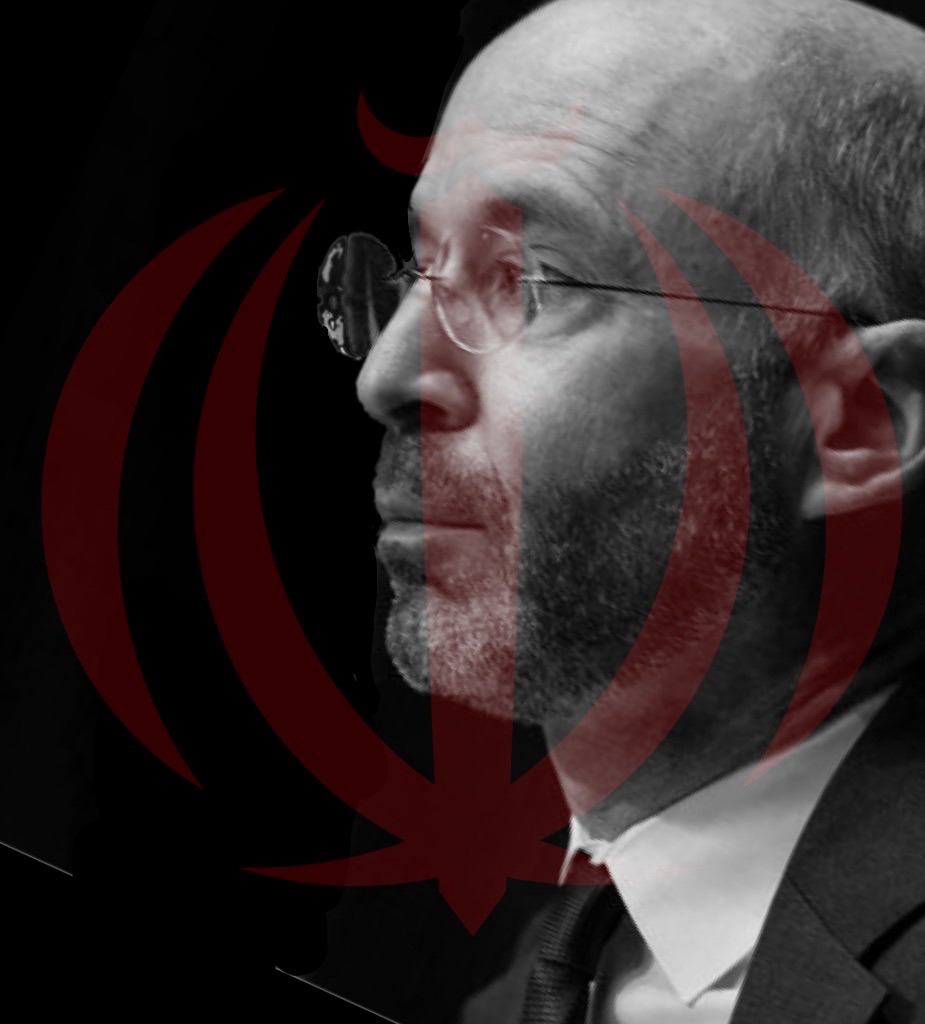
Recent revelations made in a letter by Rep. Michael McCaul and Senator James Risch to Secretary Blinken suggest Biden Administration’s former Iran Envoy Rob Malley was a compromised figure in the State Department. Malley’s security clearance was suspended more than a year ago. Weeks later, he was placed on unpaid leave, which to many observers of U.S.-Iran politics appeared as a complete expulsion from the State Department.
President Biden had made a campaign promise that he would re-engage with the Islamic Republic of Iran (IRI) to ensure a mutual return to compliance by both countries, and ultimately revive the JCPOA. Critics of the deal, which included a large number of Iranian Americans, saw this as foreshadowing of an appeasement policy espoused by former President Barack Obama. One of the first signs that led to this disquieting supposition was the nomination by the State Department of Robert Malley as the special envoy for Iran.
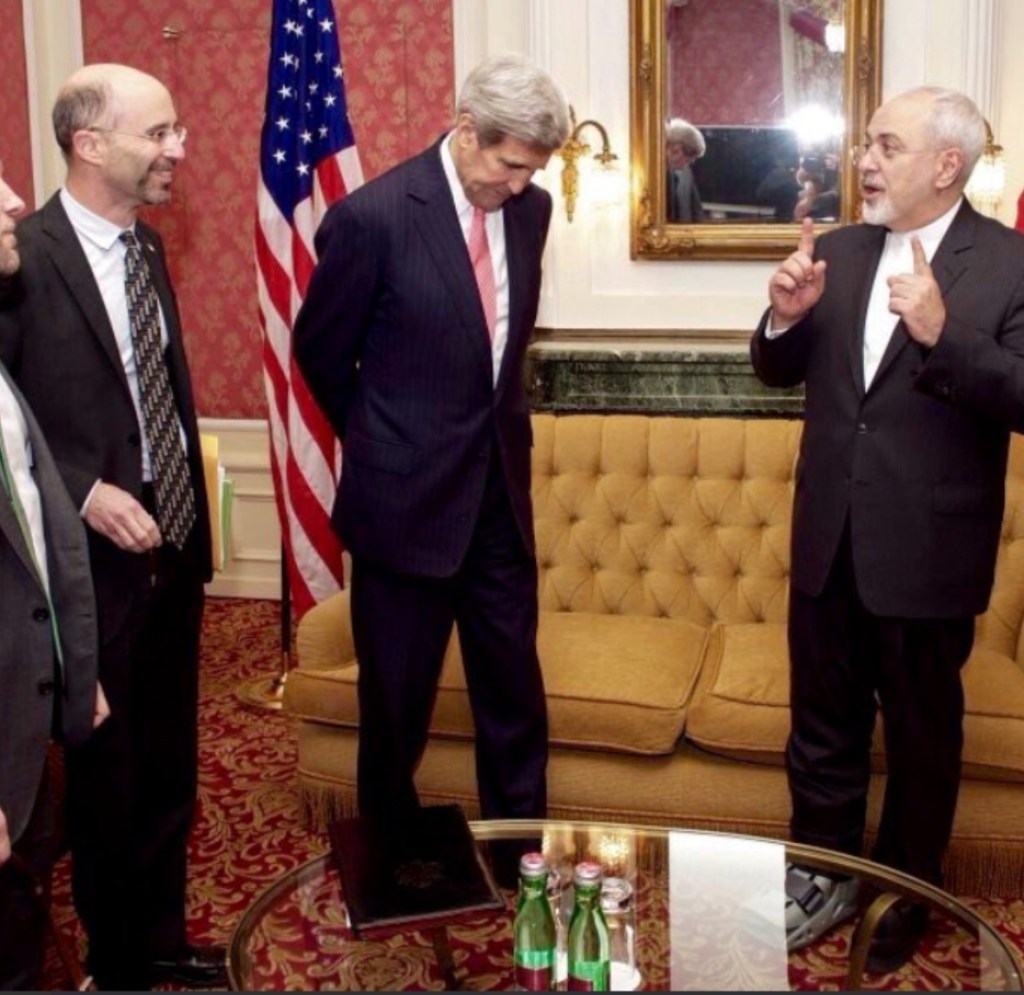
Malley was one of the key figures in negotiating the JCOPA alongside former Secretary of State John Kerry and former IRI Foreign Minister, Mohammad Javad Zarif. In that role, he repeatedly met with individuals and organizations strongly suspected of having close ties to or lobbying for the regime in Iran. In his book “Sealed Secret,” Zarif admits that a copy of their draft nuclear agreement was sent to other negotiating teams though an individual in contact with the US delegation and an active member of the International Crisis Group (ICG). Prior to joining the Obama Administration, Malley was the Program Director for Middle East and North Africa at the ICG. Zarif claims in his book that the goal for sending the document via the ICG was “to pave the path for lobbying for our draft agreement.”
These claims were substantiated by a September 2023 report by Semafor that exposed an Islamic Republic regime influence network overseen by Zarif and predominantly composed of ICG members. A series of email exchanges in 2014 between members of what was referred to as “Iran Experts Initiative” and IRI officials revealed an intimate working relationship between ICG members and the IRI regime’s Foreign Ministry under Zarif. In one such email, ICG member Ali Vaez expresses his allegiance to Zarif with flagrant sycophancy.
After leaving the Obama State Department, Malley returned to the ICG as President and CEO of the organization. In that capacity, he was one of former President Donald Trump’s harshest critics for withdrawing from the JCOPA. He believed withdrawal from the deal caused IRI to increase its belligerent activities in the region. During this period, Malley also expressed his opposition to the designation of IRI-backed Houthis in Yemen as a terrorist organization by the Trump Administration. In an op-ed in late 2019, in the wake of what is referred to as the “Bloody November” in Iran, Malley criticized what he perceived as the Trump administration’s complacent assertion that its maximum pressure policies had ignited the desire for regime change amongst the Iranian people.
In 2019, Malley was a foreign policy adviser to Senator Bernie Sanders (I-VT). Investigative journalist Alexander Rubenstein criticized his designation and wrote in 2019 that when Malley was Obama’s adviser on the counter-ISIS campaign, the U.S. led operations under Malley’s watch that saw the near-total destruction of Mosul in Iraq and Raqqa in Syria.
When Malley was appointed the special envoy for Iran in January 2021, there was an outcry from the Iranian American community. A letter was sent to Secretary Blinken on January 21, 2021, by the National Union for Democracy in Iran (NUFDI) and signed by activists, former hostages and former political prisoners asking him to reconsider appointing Malley. The letter stated that as head of the ICG, Malley had “singularly focused on cultivating close relationships with regime officials, going as far as hosting roundtable discussions with Zarif.” NUFDI’s communiqué was labeled a smear campaign by Malley’s supporters. A statement was subsequently released in support of Malley and signed by a number of journalists, analysts, academics, and progressive organizations that had a record of advocating for a conciliatory approach to the IRI regime. Senator Sanders, naturally, came to Malley’s defense. Even Hesamoddin Ashena, an advisor to former IRI President Hassan Rouhani and head of a Tehran-based think-tank closely entwined with the regime’s security apparatus praised Malley’s nomination.
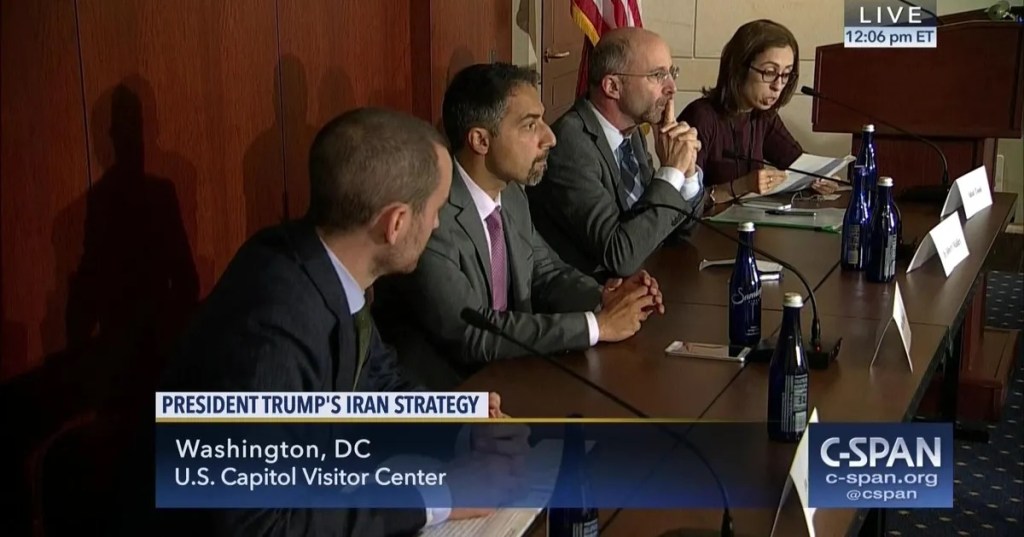
During his short tenure at the State Department, Malley operated under the radar and in the shadows. He refused to meet with Iranian American dissident groups, despite numerous requests. He rarely — if at all — held meetings with Iranian American human rights activists. He evaded updating the Congress on the status of negotiations with the IRI over its nuclear program. When he did appear before legislators for briefings, the meetings were often behind closed doors. He rarely gave interviews, and when he did, they were with select news outlets.
It has been reported that during the period of indirect negotiations with the IRI to revive the JCPOA, Malley made numerous concessions to the regime, which caused the IRI leadership to increasingly ask for more. According to the International Monetary Fund, the regime was able to triple its foreign currency reserve, from $12.4 billion in 2020 to $31.4 billion in 2021. This was happening as IRI increased its stockpile of highly enriched uranium, and as IRI-backed Palestinian groups in Gaza fired more than 4340 rockets targeting civilians in Israel. Also in that period, several policy experts who were on Malley’s negotiating team resigned. Unconfirmed reports indicate irreconcilable disagreement with Malley’s approach – specifically on being too soft on the regime – led to these resignations.
The ultimate display of Malley’s inadequacy and rigid dogmatic approach to Iran policy came as a tweet he wrote in reaction to the widespread uprising in Iran, which began in September 2022, following the murder of Mahsa Amini. He wrote that the Iranian people are asking their government to respect their dignity and human rights. This comment was made while protesters in Iran were outright rejecting the IRI and explicitly demanding regime change. A wave of criticism by Iranian Americans and Iranians around the world ensued Malley’s tweet. Malley ultimately walked back his statement, saying neither he nor the US government can claim to speak for protesters.
In January 2023, reports appeared on social media that Malley’s son Blaise worked as a reporter for Responsible Statecraft, the blog site for an isolationist think tank called the Quincy Institute, headed by Trita Parsi. Although Quincy Institute has come under much scrutiny in terms of its awkward foreign policy approach, Responsible Statecraft itself has published many articles smearing Iranian-born human rights activists, opposition figures, and Iranian American organizations. Much concern was expressed at the time by Iranians on social media regarding whether Blaise Malley’s employment constituted a conflict of interest for his father.
As negotiations with the IRI faltered and with the 2022 uprising effectively ending any prospect of JCPOA revival, Malley’s role in the State Department became increasingly murky. With trepidations on the part of the Iranian American community regarding his initial appointment as Iran envoy and their repeated calls for his resignation, the Biden administration possibly realized that Malley’s presence in the State Department may actually be a liability.
Iranian Americans saw Malley as an extremist ideologue with close connections to the IRI who was out of touch with their community’s grievances and intent on pursuing his dogmatic agenda. They also believed Malley’s formula for improper enforcement of U.S. sanctions enriched the regime and allowed it access to financial resources that were ultimately used to repress the protesters in Iran. Malley was never the type of individual they would accept as the envoy to their ancestral country, especially as their compatriots inside Iran are risking their lives calling for regime change.
The State Department continues to be evasive to inquires by both the Congress and the Iranian American community with respect to the reason and the circumstances under which Malley was dismissed. It is our community’s hope that the next U.S. administration would conduct a thorough investigation — perhaps via a designated special prosecutor — to determine if Malley’s concessions to the regime emboldened its will and might in repressing Iranian dissent, and certainly to assess his complicity — direct or indirect — in financing the October 7 attack on Israel.


Leave a Reply