
Shirin Mohabbat
A failed state is a government that has become incapable of providing the basic functions and responsibilities of a sovereign nation, such as military defense, law enforcement, justice, education, or economic stability. Common characteristics of failed states include ongoing civil violence, corruption, crime, poverty, illiteracy, and crumbling infrastructure. Even if a state is functioning properly, it can fail if it loses credibility and the trust of the people.
The term “failed state” is not an official term that is used in international law, and it does not necessarily imply that the government has collapsed completely. However, it does indicate that a state is undergoing a period of severe instability and is in danger of becoming completely ungovernable.
As such, there is no official, universally-accepted definition of a failed state. However, most every definition includes certain common, often intertwined characteristics:
- Decreased ability to defend national boundaries — Territory can be taken over by criminal gangs, rebellious insurgents, or invading military forces from another state.
- Decreased ability to police its territory — Government no longer holds a monopoly on the use of physical force to deter crime and protect the public. Corruption, crime, and lawlessness often increase.
- Decreased public services — State-sponsored services deteriorate, including health care, public education, infrastructure such as roads and utilities, and police/fire departments.
- Decreased economic stability — Unemployment rises, inflation skyrockets, currency loses value both domestically and internationally, tax revenue is lost and economic crimes often go unpunished.
- Decreased legitimacy — Overall trust in the government and its ability diminishes, both domestically among the state’s citizens and internationally among other states.
One of the most well-known methods of determining whether a would-be country is a failed or fragile state is the Fragile States Index (FSI) published by the non-profit Fund for Peace. To create the FSI, the Fund for Peace measures each country’s performance in more than 100 sub-indicators, which it compiles into a dozen indicators including Security Apparatus, Economic Decline, Human Rights and Rule of Law, and Public Services. Those twelve metrics are then combined into a single score that ranges from 0 (least fragile) to 120 (most fragile). The FSI stops short of designating a specific score at which a state goes from fragile to failed, but assigns a failure warning to any country whose score is between 60 and 89 and places an alert on countries that score 90 or higher.
In the most recent (2024) analysis by the World population review, Somalia has the highest FSI score of 111.90, followed by Yemen, South Sudan, the Democratic Republic of Congo, and Syria.
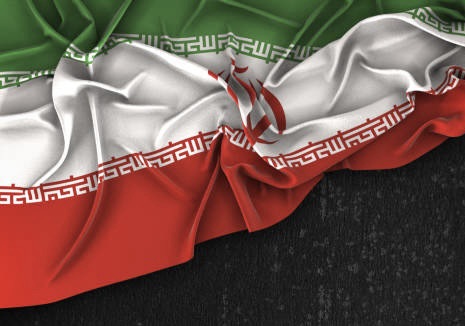
Iran, under the Islamic Republic regime, has an FSI score of 85.40, which places this country in the high warning category. With overwhelming domestic social grievance, substantial brain drain, corruption, mismanagement of resources, unequal access to resources, poverty, and a chronic state of war, the Islamic Republic regime meets the conditional criteria for a failed state, irrespective of its FSI score.
Iran’s progression towards failed status has been quite rapid, despite Western governments, including the United States, following a collective conciliatory approach vis-à-vis the regime; a policy that many believe amounts to outright appeasement. The current government in the United States under President Joe Biden, has gone out of its way to placate the regime, despite at times displaying firmness on the surface. This has in fact been the case with most, if not all of the Group of Seven (G7) countries.
This progression may be expedited if political parties more hostile to the Islamic Republic replace the existing governments in powerful nations such as the United States. If, for example, Donald Trump replaces Biden as president in 2025, this will tilt the already imperfect balance towards state failure. The same can be said about Canada and take-over by a conservative government.
A feature that is often overlooked in designation or characterization of failed state or “at risk” status is perpetual and increasing outlaw behavior at international level and state-sponsored criminal activity. Since inception, the Islamic Republic regime has been steadily increasing it criminal conduct and activities over more than 4 decades. This behavior includes, among others, hostage-taking, money-laundering, exploitation of other nations, state-sanctioned assassinations, and kidnapping. In essence, the Islamic Republic has become dependent on crime as means for its survival and sustenance.
State-sanctioned crime, at domestic and international level, is systematically carried out by a militaristic group, the Islamic Revolutionary Guard Corps (IRGC) and encouraged by the highest authority in the Islamic Republic: Supreme Leader Seyyed Ali Khamenei. The IRGC resorts to crime to sustain the existing politico-ideological system, which in turn further fortifies the IRGC. This cycle of criminal conduct is reminiscent of the Third Reich with its militarized criminal muscle, the Schutzstaffel (SS).
While the Islamic Republic may not meet all the “classical” symptoms of a failed state, supporting features that do not fit the proposed criteria place the regime in that category, or at least at the brink of state failure. The main conundrum, at least for the Iranian dissident community, is when a failed state proceeds to become a failed nation. This will be devastating for the Iranian people and potentially for the world.
Two features that could accelerate the progression of a failed state to a failed nations are ascendancy of Marxism/communism and radical ethnic separatism.
While the Soviet Union in the 1980s was considered a superpower, it actually was a failed state headed for collapse. Soviet Union’s satellite failed states in the Balkans followed suit. Communism actually accelerated the collapse of the failed Soviet state. As with the Soviet Union, the Islamic Republic imperialistic endeavors meant to “export” the 1979 Khameneist revolution, has also created failed states, at least in Syria and Yemen. Venezuela is the prime example of how state failure can be precipitated or hastened by dominance of Marxism/communism.
Within groups that claim to be the “opposition” to the Islamic Repubic, a minority are ethnic separatists. If Iran as a nation is separated into individual smaller states along ethnic lines with some sort of a centralized government to maintain checks and balances, it will far from a federalist system like the United States. Each individual ethnic state within the larger Iran will be a failed state under a “federal” leadership that itself is failing. Even if ethnic separatist parties/group are now united in rhetoric, tensions and civil was are likely to ensue when a conglomerate of failed states compete for resources and there is a lack of equity. Multiply failed states competing for the same resources is more devastating than a single failed state.
In conclusion, the Islamic Republic regime is a failed state in the sense that it lacks legitimacy at home. The only solution to prevent Iran from moving from a failed state to a failed nation is regime change. There is absolutely no other way to change this course. It is a brake-less train that is headed for a cliff, unless a rail change diverts it away from disaster. If Iran as a nation fails, the region and the world will soon be headed for the same cliff.


Leave a Reply