
Charlene Savadkouhi
Introduction
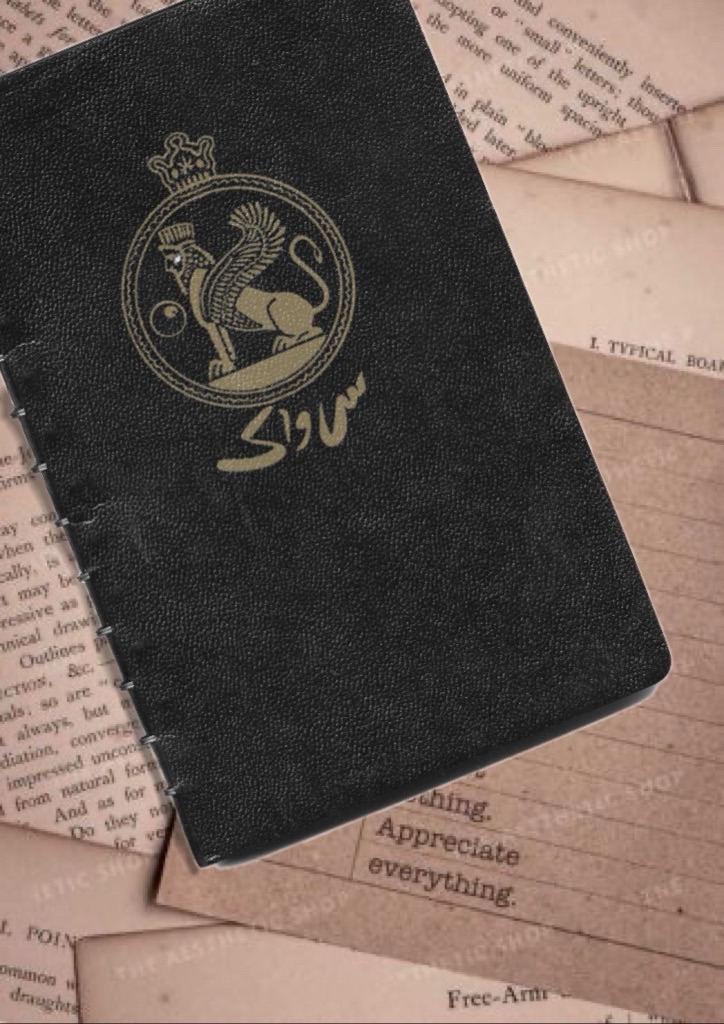
The history of SAVAK (acronym for the Persian: Sāzmān-e Ettelā’āt va Amniyat-e Keshvar), Iran’s national intelligence and security organization, is a complex tale marred by propaganda, political agendas, and the quest for truth. The organization, founded in 1957 with assistance from the CIA and Mossad, was tasked with maintaining national security and countering espionage and terrorism. Over time, it grew notorious for its aggressive tactics against perceived threats to the state. Critics, including opposition groups and some Western journalists, painted SAVAK as a brutal organization responsible for systematic torture and thousands of political arrests. This portrayal was amplified by influential figures like Reza Baraheni, whose accounts of torture and abuse in Iranian prisons were widely publicized.
The Role of Propaganda
However, this image of SAVAK was often exaggerated. At its peak, SAVAK employed around five thousand office workers and field agents, a far cry from the twenty thousand claimed by detractors. The number of informants listed in SAVAK’s records, about ten thousand, included many who had been approached but refused to cooperate. These figures suggest a less omnipresent and more bureaucratically limited organization than its fearsome reputation suggested.
The Influence of Fiction: Human Rights Organizations and the Exaggerations of Reza Baraheni
Reza Baraheni, an Iranian poet, and writer, was known for his provocative and often fictional accounts of human rights abuses under the Shah’s regime. His memoir, “Crowned Cannibals,” is a propagandist portrayal of Iran as a dystopian society characterized by misery and murder. Baraheni’s work was greatly influential in shaping international perceptions of Iran, particularly during the 1970s when his writings gained widespread attention.
One of the most egregious examples of Baraheni’s exaggerations is his claim that “thousands of men and women have been summarily executed during the last twenty-five years” under the Shah’s rule. This figure is vastly inflated and not supported by historical evidence. While there were instances of political executions during the Shah’s reign, the actual number is much lower than Baraheni suggests.
Baraheni also alleges that more than 300,000 people had been in and out of prison during the last nineteen years of SAVAK’s existence, with an average of 1,500 people arrested every month. These claims are not substantiated by credible sources and appear to be exaggerated for dramatic effect.
Another sensational claim made by Baraheni is that 5,000 people were kidnapped in one day, sometimes with the use of tanks. This claim is particularly outlandish and lacks any factual basis. There is no historical evidence to support such a large-scale kidnapping operation by the Shah’s government.
Baraheni’s writings reflected a deep-seated animosity towards the Shah and his government which can be explained given his hardcore communist ideological leanings.
The Impact of Misinformation and Media ‘s political agenda and sensationalism
The media conveniently and dutifully weaponized the fictional account of Barahanis lies and ran with it: “Amid a wave of moral indignation, Time magazine lamented Washington’s inability to influence domestic policy in “largely self-sufficient and comparatively wealthy States like Iran.” They expressed hope that “torturing dictatorships will be overthrown.”
Red Cross Inspections and the Quest for Truth
Amid growing international criticism, the Shah took the unprecedented step of inviting the ICRC to inspect Iran’s political prisons in 1977. This decision was partly motivated by the need to address negative perceptions and partly by internal pressure from Iran’s middle class, who demanded political reforms and an improvement in human rights conditions.
The ICRC’s inspections were thorough and impartial, providing a much-needed counterbalance to the often one-sided reports from opposition groups and Western media. The inspectors found that there were 3,087 political prisoners in Iran at the time of their investigation, a significant reduction from the peak of 3,700 inmates two years earlier. Moreover, while approximately one-third of these prisoners reported having been subjected to some form of torture or abuse, the inspectors found no evidence of torture in the months leading up to their visit.
Propaganda and Perception: A Reassessment
The discrepancies between the ICRC’s findings and the widely accepted narrative about SAVAK and human rights abuses in Iran highlight the role of propaganda in shaping public perception. Opposition groups, eager to undermine the Shah’s regime, provided inflated and often false statistics to human rights organizations and the media. Western journalists, such as Jonathan Randal of the Washington Post, were sometimes manipulated by anti-Shah propagandists like Abolhassan Banisadr.
The portrayal of SAVAK as a bloodthirsty organization did not stand up to scrutiny. There were instances of torture, but the scale and intensity of these abuses were massively exaggerated to serve political purposes. The ICRC’s findings, which indicated a far lower incidence of torture and a significantly smaller number of political prisoners, were largely ignored or dismissed by the same media outlets and human rights organizations that had previously condemned the Shah’s regime.
The Aftermath and Legacy
Despite the ICRC’s exoneration of the worst charges against SAVAK, the damage to the Shah’s reputation was already done. The international community, particularly in the West, continued to view his regime through the lens of earlier reports of human rights abuses. This perception played a crucial role in undermining the Shah’s support both domestically and internationally, contributing to the revolutionary fervor that ultimately led to the fall of the Pahlavi dynasty in 1979.
The episode of the Red Cross inspection and the exaggerated claims about SAVAK serve as a reminder of the power of propaganda and the importance of truth in the realm of human rights. The Shah’s decision to invite the ICRC was a bold move towards transparency, but it was too little, too late to counter the prevailing narrative. The case of SAVAK underscores the complex interplay between truth, perception, and political agendas in the context of international human rights advocacy.
Conclusion
The story of SAVAK and the international response to its actions is a sobering reminder of the power of propaganda and the importance of truth in the realm of human rights. While the Shah’s regime was not without its faults, the exaggerated and often false narratives that dominated the discourse contributed to a misunderstanding that had profound and lasting impacts.
It is also crucial to reassess historical narratives with a critical eye. Many accounts of SAVAK and the Shah’s regime were influenced by propaganda and political agendas. Revisiting these narratives with the benefit of hindsight and more balanced perspectives can provide a more accurate understanding of the past. The human rights organizations and their complicity in peddling geopolitical agenda on Iran stands as a pivotal, yet cautionary, chapter in the annals of human rights advocacy. It serves as a stark reminder of the perils of misinformation and propaganda, highlighting the critical need for vigilance and skepticism in the face of sensationalism and political agendas. The failure to hold anyone accountable for the inaccuracies and distortions in the report is not just irresponsible; it is a travesty of justice that speaks to a system where truth is sacrificed at the altar of political expediency.
This lack of accountability reveals a disturbing truth about the nature of power and influence, where agendas often eclipse the pursuit of truth, leaving millions to suffer the consequences. The report’s impact was not just on the Shah’s regime but on the Iranian people, whose lives were irrevocably altered by the narrative crafted by external forces with their own agendas.
Furthermore, the stark contrast in international pressure on the Shah’s regime compared to the relative silence regarding human rights abuses in the Islamic Republic today raises troubling questions about the consistency and integrity of human rights advocacy. It underscores the need for a more principled approach, one that is not swayed by political convenience or strategic interests.
As we reflect on this turbulent chapter in history, we must heed its lessons and commit ourselves to upholding the principles of truth, justice, and human rights in all our endeavors. The legacy of the human rights organizations serves as a stark reminder of the consequences of unchecked power and the imperative of holding those in authority accountable for their actions.


Leave a Reply