
Simone Derayeh
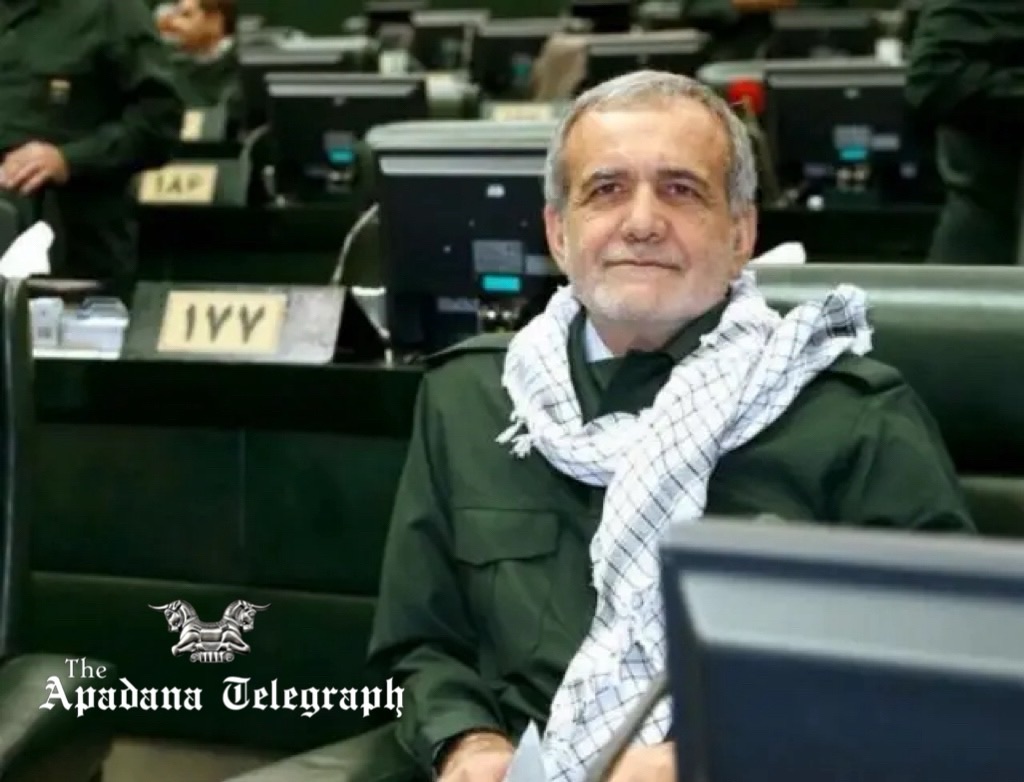
In one of his initial statements, the newly appointed President of the Islamic Republic of Iran, Masoud Pezeshkian, who took office following a sham election with less than 10% participation, sent an open message to Hassan Nasrallah of Hezbollah. He expressed unwavering support for Hezbollah and other proxies, endorsing their terrorist attacks on Israel. This statement is further evidence that the Islamic Republic remains committed to funding proxies in the Middle East.
The president’s message not only reaffirms Islamic Republic’s support for Hezbollah but also signals a continuation of its broader regional strategy. This strategy includes backing various militant groups such as the Houthis, Hamas and Hezbollah to exert influence, destabilize the region, and continue attacking democratic movements. Despite international sanctions and diplomatic pressure, the Islamic Republic’s leadership appears resolute in its pursuit of these objectives. The new president’s stance underscores the ongoing geopolitical tensions in the region and highlights the challenges faced by those seeking peace and stability in the Middle East. The endorsement of such actions by a head of state raises concerns about the future trajectory of the Islamic Republic’s foreign policy and its implications for regional and global security.
In light of these developments, President Biden should be warned against sitting at the negotiating table with the Islamic Republic and lifting sanctions prematurely. Specifically, sanctions against former Foreign Minister Mohammad Javad Zarif hould not be lifted, and he should not be allowed entry into the United States. Hooman Majd, who routinely sides with the position of negotiations with the regime in Iran, recently posted a tweet advocating for the lifting of sanctions on Zarif and suggesting that Zarif’s attendance at the UN General Assembly in New York could facilitate dialogue to reduce tensions; this is misguided. Given Iran’s ongoing support for terrorist activities and its destabilizing actions in the region, as well as its proven history, lifting sanctions on Zarif would send the wrong message and undermine efforts to hold the regime in Iran accountable for its actions.
Majd’s argument overlooks the critical issue of Islamic Republic’s persistent support for terrorism and regional destabilization, irrespective of the sitting president being reformist or hardliner. Engaging in dialogue without addressing these fundamental issues would only embolden the Islamic Republic’s leadership and potentially lead to a further escalation of conflicts. It is imperative that the Biden administration maintains a firm stance on sanctions. The international community must prioritize accountability and security over diplomatic engagements with a totalitarian state sponsor of terror that fail to address the root causes of regional instability.
The solution for peace in the Middle East, stability and security in the region can only be achieved by cutting off the head of the snake. Reza Pahlavi, the Crown Prince of Iran, has a specific plan that will help topple the regime in Iran through the hands of the Iranian people. Almost 90 percent of the population has clearly sent their message that the regime has no legitimacy by boycotting the elections. The Crown Prince suggests maximum pressure on the regime in the form of sanctions and maximum support of people of Iran, who are the clear opposition to the totalitarian regime. Only through this approach is peace and security possible in the region and beyond.


Leave a Reply