
Charlene Savadkouhi
For nearly five decades, Iranians have been grappling with the aftermath of the 1979 revolution, yearning for the restoration of the political, social freedom, and economic prosperity they once enjoyed. The tyranny and regression that followed the revolution stripped away the liberties and progress of the past, leaving the nation in a state of despair.
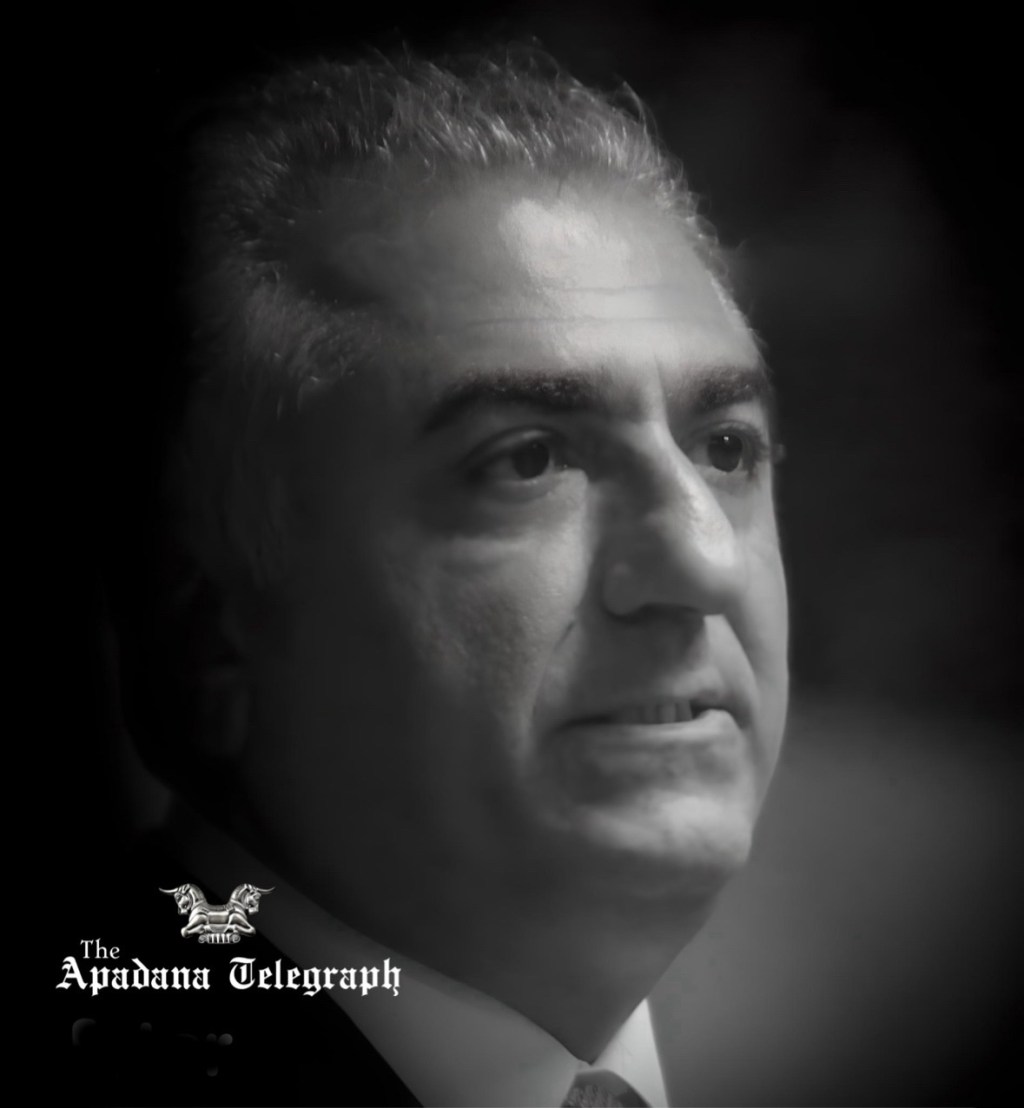
Amidst this turmoil, Crown Prince Reza Pahlavi emerges as a beacon of hope, resonating deeply with the Iranian people. His unwavering dedication to national interests, in contrast to divisive ideologies and international conflicts, sets him apart as a leader embodying the aspirations of a nation striving to reclaim its sovereignty and realize its true potential.
Why Do Iranians Embrace the Crown Prince Reza Pahlavi?
It is not merely nostalgia that drives the Iranian people’s support for Crown Prince Reza Pahlavi; it is the proven legacy of his father and grandfather, Reza Shah. These leaders lifted Iran from ruin, poverty, and the aftermath of world wars, steering the nation through the challenges of the Cold War and abolishing archaic practices like slavery, feudalism, tribalism, polygamy, and child marriage. They tackled illiteracy and built essential infrastructures, including roads, plumbing, electric grids, schools, universities and potable water systems. They established a secular modern judicial system in opposition to Sharia laws and transformed a country steeped in backward religious dogma.
Under their leadership, women gained the freedom to choose their attire and benefitted from family protection laws that abolished child marriages. Most importantly, they stood up to the powerful clerics who had ruled over Iran for centuries. Their commitment to modernization, secularism and progress laid the foundation for a society free from backward religious constrain and ready for a democracy. The resounding impact of progress and modernization deeply connects with the Iranian populace, stirring a collective yearning for a better tomorrow.
Pahlavi Legacy: Defiance against Theocracy and the Quest for a Secular Society
The reign of the Pahlavi dynasty from 1925 to 1979 stands in stark contrast to the totalitarian theocratic rule that followed. For those born after the revolution, the Pahlavis symbolize defiance and resistance against theocracy, offering a vision of a secular and progressive society
Symbolism of the Pahlavi Era
The Pahlavis embody the hope that life free from Sharia laws and clerical domination is achievable. This era provides a tangible example of a society where secular laws replaced outdated centuries-old religious medieval Sharia doctrine. The Pahlavis’ ability to confronts and diminish the power of the clergy offers a historical precedent that the younger generation can aspire to.
Concrete Evidence of Secular Governance
During the Pahlavi reign, significant strides were made to dismantle the influence of the clergy and Sharia laws. The Pahlavis enacted policies that eradicated practices like slavery, polygamy, and child marriage, transitioning Iran from a tribal-feudal society to one with modern, secular laws– a testament to the possibility of replacing draconian Sharia laws with secular and progressive legislation.
Empowerment and Individual Rights
The Pahlavis championed individual rights and challengedthe dominance of clerics, fostering a society where citizens enjoyed freedoms and protections. This historical legacy empowers the youth to believe in their capacity to effect positive change and shape their own destinies.
Cultural and Social Freedoms
Celebrated for promoting personal and social freedoms, the Pahlavis represent a departure from medieval constraints, advocating for values like gender equality, freedom of expression, and international cooperation. The post-revolution generation views the Pahlavi era as a time when such ideals were actively pursued and upheld.
Economic and National Pride
The Pahlavi era is remembered for its economic prosperity and national pride, setting a standard for a thriving economy, a robust currency, and a respected global standing. This stands in stark contrast to the challenges faced under theocratic rule, inspiring the post-revolution generation to envision a prosperous and influential Iran.
Preservation of Iranian Heritage
Central to the Pahlavi legacy is their commitment to preserving Iranian culture, history, and art, celebrating the nation’s rich heritage. This focus on national identity resonates with the post-revolution generation, instilling a sense of pride in honoring their historical roots.
Progress towards Democracy
Despite its imperfections, the Pahlavi era is regarded as a period of transition towards democracy and modernity. The post-revolution generation acknowledges the dynasty’s role in laying the groundwork for a more democratic and progressive society, acknowledging the strides made towards a more inclusive and forward-thinking Iran.
Legacy of Betrayal and Disillusionment
The Islamic Republic of Iran, established in 1979, promised a utopian vision rooted in religious and Islamist Marxist ideology. However, this vision quickly turned into a nightmare for many Iranians. The regime’s prioritization of religious dogma over the welfare of its citizens has led to widespread disillusionment. Theocratic rule has suppressed political freedoms, stifled economic progress, and eroded cultural pride. Iranians have been legally and constitutionally subjected to a regime that sees them not as citizens but as subjects, governed by divine mandaterather than their earthly needs.
The Unfulfilled Dream of Economic Prosperity
Iran is a nation rich in resources and potential, yet its economic aspirations have been systematically crushed under the weight of mismanagement, corruption, and international isolation. The Islamic Republic’s focus on ideological, terrorism and reactionary international causes, such as supporting militant groups abroad, has diverted precious resources away from domestic development. Iranians dream of an economy unshackled from ideological constraints, where innovation and enterprise can flourish, creating opportunities and lifting millions out of poverty.
Cultural Erosion and the Thirst for Freedom
The heart of Iran beats with the rhythm of an ancient and glorious civilization. However, the Islamic Republic’s narrow, reactionary ideology has sought to erase this rich cultural heritage. Iranians yearn for a state that celebrates their diverse history and unites them in a shared sense of national pride and purpose. At the core of this struggle lies an unquenchable thirst for freedom. Iranians long for a society where they can speak freely, assemble without fear, and live without oppressive oversight. This demand for freedom is a roaring call to action, echoing through the streets and hearts of the nation.
Iran’s Path to Unity and Progress: Embracing the Vision of a Secular State
In this dramatic quest for a better Iran, the vision of a unified, secular state emerges as a beacon of hope. Iranians see in this vision a path to stability, prosperity, and dignity. They envision a government that rises above ideological squabbles, focusing instead on the pragmatic needs of its people; a state that respects religious freedom while maintaining a clear separation between religion and politics, ensuring that all citizens can coexist in harmony. Crown Prince Pahlavi has consistently advocated for a secular democratic Iran throughout his life.
Crown Prince Reza Pahlavi: Champion of National Interests, Not Ideological Chains
Crown Prince Reza Pahlavi, the son of Mohammad Reza Shah Pahlavi, has risen to prominence as the most popular leader of the Iranian opposition. His unwavering commitment to values that prioritize national interests over ideological agendas resonates deeply with the Iranian people. Pahlavi’s vision for a modern, secular, and progressive Iran stands in stark contrast to the current theocratic regime and past ideological movements. He champions national interests and puts them above the ideological shackles that have bound the Islamic Republic or the specter of international solidarity with reactionary causes of Marxism and Islamism.
Reclaiming Sovereignty from the Theocracy
Iranians stand resolute in their determination to reclaim sovereignty from a regime that perceives them as not citizens but subjects, beholden to the constitution of the Islamic Republic. They yearn for a governance grounded in earthly concerns, one that attends to their profane needs, shunning an obsession with divine hegemony or eschatological aspirations. The theocratic regime, more a cause celebre than a nation-state, fixates on ideological evangelism rather than domestic welfare. National interest, within this crucible, demands a governance that advocates for the welfare, security, and prosperity of its people, surpassing ideological dogma and reactionary international pursuits.
Crown Prince Reza Pahlavi’s Vision: A Responsible Global Stakeholder
Reza Pahlavi envisions an Iran that embodies the ethos of a responsible global stakeholder, a stark contrast to the rogue state persona epitomized by the existing theocratic regime. His concept for Iran encapsulates a realm of peace, prosperity, and collaboration, both regionally and globally. By foregrounding national interests ahead of ideological imperatives, Pahlavi endeavors to rehabilitate Iran’s stature and recalibrate its role as a constructive contributor to the global world stage.
From Pariah to Partner: Crown Prince Reza Pahlavi’s Diplomatic Vision
Under the aegis of the Islamic caliphate Republic, Iran has metamorphosed into a pariah state, ostracized due to its fixation on ideological promulgation and funding of transnational militant terrorist factions. This metamorphosis has culminated in international sanctions, economic adversity, and an enfeebled global standing. Pahlavi’s vision diverges markedly from this trajectory. He advocates for an Iran that engages in amicable diplomacy, upholds international tenets, and collaborates with other nations to confront shared global challenges.
Peace with Israel
Under the Shah, Iran had a strong, albeit discreet, relationship with Israel. This cooperation included economic ties, intelligence sharing, and mutual strategic interests. Crown Prince Reza Pahlavi seeks to renew this relationship based on shared interests and regional stability. He believes that Iran can once again become an ally to Israel, contributing to peace and security in the Middle East.
Harmony with Arab Neighbors
Crown Prince Reza Pahlavi also aims to restore Iran’s historically amicable relations with its Arab neighbors. He envisions a Middle East where Iran works collaboratively with countries like Saudi Arabia, the United Arab Emirates, and Egypt to promote regional security and economic development. By prioritizing dialogue over confrontation, Pahlavi believes that Iran can help create a more stable and prosperous region.
National Interest above Ideological Shackles
A foundational pillar of Reza Pahlavi’s paradigm is the pervasive primacy of national interests over ideological dogma. In contradistinction to the prevailing regime, which exalts its theocratic notions and revolutionary ideals above the welfare of its populace, Pahlavi advocates for a governance anchored in the pragmatic necessities of its constituents. This encompasses economic advancement, societal progression, and the preservation of human rights.
Economic Development and Prosperity
Reza Pahlavi comprehends the quintessence of economic prosperity in shaping Iran’s fate. He envisions a government that harnesses Iran’s bounteous resources to cultivate a vibrant economy, fostering ingenuity and employment creation. By partaking in equitable and reciprocal trade with other nations, Pahlavi aspires to extricate millions of Iranians from indigence and furnish them with pathways to an enhanced quality of life
Social Progress and Human Rights
Crown Prince Reza Pahlavi remains resolute in his assertion that human rights and crafting a milieu that honors the rights of all individuals supersede any particular governance form. A governance that esteems national interests should also underscore the social welfare of its populace. Pahlavi’s vision encompasses a dedication to human rights, freedom of expression, and political pluralism. He advocates for a secular state that permits individuals to practice their faith untrammeled, devoid of religious imperatives dictating public policy. This ethos assures that all Iranians, irrespective of their convictions, can coexist harmoniously and partake fully in the political and social ethos of the nation.
Reclaiming Iran’s Sovereignty and Identity
Crown Prince Reza Pahlavi’s opus revolves around the reclamation of Iran’s sovereignty from a regime that perceives its denizens as subjects rather than citizens. He epitomizes a governance mired in worldly concerns, a regime vested in the secular exigencies of its people, not one entranced by celestial mandates or eschatological promises. Pahlavi posits that through a discourse foregrounding the material needs and aspirations of its populace, Iran can rekindle its rightful preeminence in the annals of history.
A Nation’s Defiant Hope
The people of Iran stand at a crossroads, their collective heart beating with a defiant hope for a brighter future. They reject the failed ideologies of the past and present, calling instead for a modern nation-state that champions their national interests and secures their place in the world. This powerful, dramatic call for change is a testament to the resilience and determination of a people who refuse to be defined by the chains of ideological extremism. In their struggle, Reza Pahlavi emerges as a beacon of hope, poised to lead Iran towards a future of progress, freedom, and national pride.
Reza Pahlavi: Illuminating Iran’s Path to Progress and Freedom
Crown Prince Reza Pahlavi connects deeply with the Iranian populace, embodying their yearnings for a more auspicious tomorrow. His conception of Iran as a responsible global actor, devout to harmony, prosperity, and human rights, stands as a colossal contradiction to the prevailing regime’s pernicious and expansionist ethos. By espousing national interests, nurturing amiable relations with neighbors, and fortifying governance responsive to its populace, Pahlavi emerges as a lodestar of hope for a resurgent Iran poised to reclaim its manifest destiny, shining as a bastion of progress and freedom.
Conclusion
Crown Prince Reza Pahlavi’s vision for Iran transcends mere strategic planning for the future; it embodies a stirring and urgent call to action for a populace deeply yearning for transformative change. His unwavering dedication to prioritizing the national interest above all ideological challenges reflects a profound commitment to steering Iran towards a new dawn of prosperity and liberty. Furthermore, his tireless efforts to revitalize and enrich Iran’s economic and cultural fabric highlight his profound understanding of the country’s potential and the urgency of realizing it.
Through advocating for a modern, secular, and democratic Iran, Crown Prince Reza Pahlavi sets the stage for a tectonic shift in the nation’s trajectory. His vision, rooted in the principles of progress, inclusivity, and advancement, lays the groundwork for a society where the pragmatic needs of all citizens are not just acknowledged but prioritized. In a landscape hungry for change and revitalization, Crown Prince Reza Pahlavi’s transformative vision offers a path towards a brighter tomorrow, characterized by shared prosperity, individual freedom, and a reinvigorated national identity and pride.


Leave a Reply