
Sepideh Bahrami
This essay sheds light on the dark history of U.S. involvement in Iran’s politics during 1979 coup and the consequences of that interference. Inspired by Reza Shah II Pahlavi’s powerful speech at NatCon4, the essay delves into the impact of American actions on the Iranian people and the region as a whole.
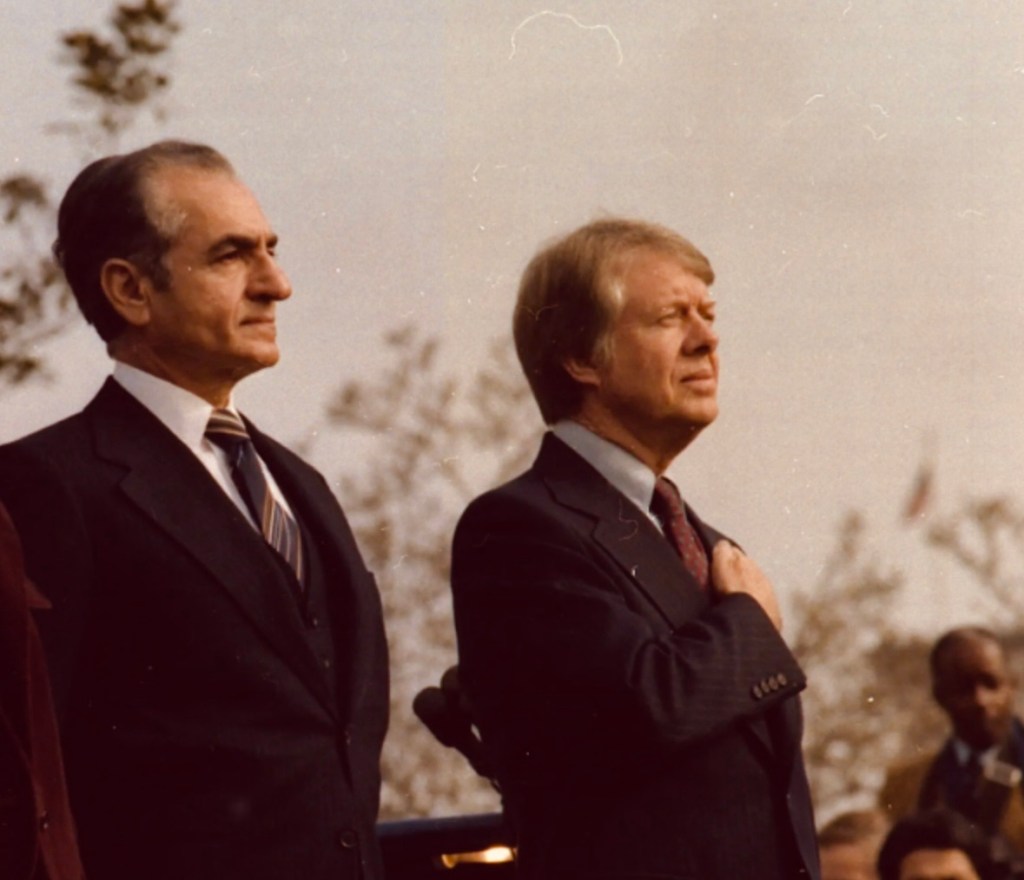
U.S. involvement in Iran’s politics has had a long and complicated history, filled with betrayal, scandal, and manipulation. From the 1970s to present day, American leaders have made decisions that have had far-reaching consequences, shaping the current state of affairs in the Middle East and beyond. One example of this is the role of President Jimmy Carter in the downfall of the Shah of Iran and the rise of the Islamic Republic.
Dr. Mike Evans detailed in his book how Carter sent millions of dollars to Khomeini’s account in Paris, funded the mujahideen who later formed the Taliban and Al-Qaeda, and even paid a hefty sum to the Islamic Republic to secure the release of American hostages which ultimately resulted in the Iranian hostage crisis. These actions destabilized the region and helped extremists gain power, threatening global security. Even President Ronald Reagan admitted that Carter’s policies were a mistake, abandoning a reliable ally, the Shah, in favor of an extremist regime.
The American media, in collusion with the BBC, played a significant role in shaping public opinion during the 1979 revolution. By framing the protests as a popular uprising against a repressive dictator and providing extensive coverage of the events, the media garnered sympathy and support for the protesters. This coverage also helped to raise awareness about the situation in Iran and pressure the Shah to step down. The portrayal of the Islamic Republic as a force for liberation and social justice also influenced public perceptions, both in Iran and abroad.
American Democrats have consistently supported and aided Islamic fundamentalist terrorists for their own gain, perpetuating violence and instability in the region. The Shah of Iran himself, in his final interview, expressed disbelief at the campaign to demonize him and elevate his enemies as saviors of the nation. He highlighted the propaganda used to paint him as a tyrant, while the true intentions of those seeking power were hidden behind a facade of liberation and democracy.
The actions of American leaders in Iran have had disastrous consequences, leading to the rise of extremist ideologies and the spread of terrorism globally. The betrayals and scandals in U.S. involvement in Iran show a lack of understanding of the region and a disregard for the well-being and self-determination of the Iranian people.
In light of these revelations, it is crucial to listen to the extraordinary speech made by the exiled Shah of Iran, Reza Shah II Pahlavi, calling on international leaders, specifically the American government, to stop negotiating with and appeasing the corrupt Islamic Republic. He urges them to join the people of Iran in their fight against the regime and their quest for a secular, democratic government that reflects their values, culture, and beliefs.
In conclusion, the history of U.S. involvement in Iran’s politics is filled with betrayal, scandal, and manipulation, with American leaders making decisions that have had far-reaching consequences. The media’s role in shaping public opinion during the 1979 revolution and the subsequent rise of the Islamic Republic further highlights the complexities of the situation. It is imperative for international leaders to heed the call for maximum pressure on the Islamic Republic regime and show unwavering support for the Iranian people in their pursuit of democracy and freedom.


Leave a Reply