Cyrus Parsa
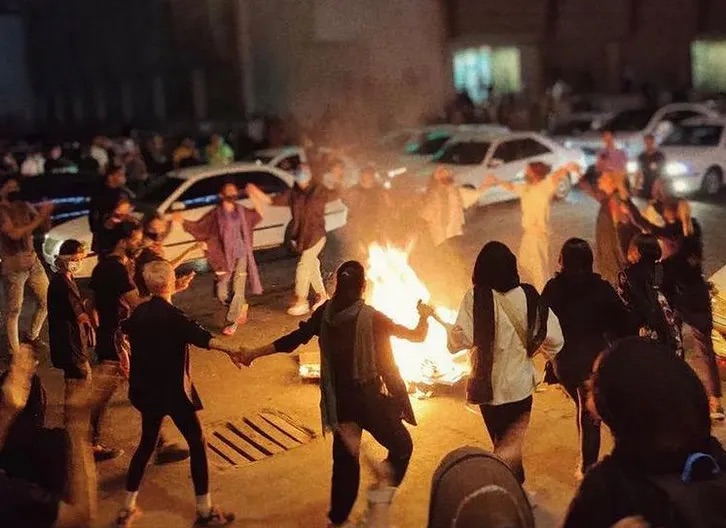
The Mahsa Uprising, otherwise known as the Woman, Life, Freedom movement, can be seen as one of the greatest opportunities in recent decades for the Iranian people to challenge the oppressive regime in power. However, despite the potential, the movement ultimately failed. This article explores the reasons behind this failure and what can be learned from it.
The most significant achievement of the Mahsa Uprising was the solidification of the national movement as the dominant and trusted discourse among the Iranian people. Today, the legitimacy of a political movement across the country is measured by its adherence to national principles. Core values such as the national flag, territorial integrity, a unified nation, and the establishment of a strong central government have become widely accepted standards, emerging from many confrontations with anti-national elements. These values are now considered fundamental, with their legitimacy unquestioned.
However, the question remains: why did the uprising fail? The author identifies the most prominent factors contributing to this failure and hopes that these issues will be thoroughly researched and addressed to prepare the national movement for future uprisings and avoid repeating the bitter experience of defeat.
Lack of a National Media Outlet
Without an independent national media outlet, the national movement lost control of the narrative to leftists and other anti-national forces. Journalists, often funded by external projects, manipulated the truth, highlighted irrelevant issues, and injected false hope, leading the people into despair and disillusionment from within.
Inability to Control the Narrative
During the Mahsa Uprising, the national movement failed to effectively narrate the story of the national revolution. This allowed foreign-funded activists and human rights profiteers to shape the narrative for Western audiences, reducing the revolution to a populist, minority-centered movement aligned with reformist agendas within the non-issue of hijab.
Lack of National Organizations
The uprising revealed a stark contrast between the national movement’s organizations and the myriad anti-national entities like NIAC, the Atlantic Council, and various other councils. These semi-organized groups had stronger lobbying power, were more media-savvy, and had greater visibility than the national organizations.
Disunity Within the National Spectrum
The uprising exposed deep-seated divisions among national parties and organizations, which not only hindered cooperation but also turned the movement into a competitive arena where eliminating rivals took precedence over achieving shared goals. Following the exiled Shah’s political leadership and adopting his core principles could have mitigated these issues, but personal ambitions and ideological differences often overshadowed national interests.
Lack of International Support
The powerful lobbying efforts of the regime in the West have turned leftist groups into potential allies of the regime, and the cult-like devotion of some factions has consistently worked against the national movement. As a result, apart from establishing a serious relationship with the Israeli government, the national movement struggled to gain significant international support.
Disorganization and Wishful Thinking
The real strength of the national movement lies not in its political intermediaries but in the dedicated and anonymous patriots who tirelessly defend Iran and its exiled Shah. Despite their efforts, these activists lack organization and support, operating spontaneously rather than through coordinated efforts. Meanwhile, the political middle class remains disconnected from reality, floating in the clouds while the true patriots stand firmly on the ground.
In addition to these internal challenges, the Mahsa Uprising faced powerful external obstacles that played a significant role in its defeat. The regime’s repression, anti-national lobbies, media censorship, and the government’s security traps were among the factors that, through sophisticated strategies, prevented the national movement from achieving its goals.
The Regime’s Brutal Repression
The regime, relying on its extensive military and security forces, including the Revolutionary Guards, police, and intelligence agencies, unleashed unprecedented violence to suppress the uprising. The use of military-grade weapons, mass arrests, torture, and the creation of an atmosphere of fear significantly weakened the protesters’ morale and stifled the movement. The regime also imposed severe internet restrictions and communication blockades to disrupt the coordination and organization of the national movement.
Anti-National Lobbies and Unholy Alliances
Powerful lobbies like NIAC, with deep influence in Western political and media circles, systematically worked to undermine the national movement and weaken the true voice of the Iranian people. These lobbies distorted the realities of Iran to advance their agendas, diverting support away from the national movement and towards fringe issues.
Censorship of the Real Voice of Society
International and Iranian media, often influenced by leftist and anti-national currents, censored the true demands of the Iranian people, focusing instead on peripheral issues. By amplifying false narratives and irrelevant concerns, these media outlets diverted attention from the national movement’s core objectives, weakening efforts to unite the opposition.
Media and Journalists’ Focus on Non-Issues
Media and journalists affiliated with anti-national currents focused on issues like minority rights, federalism, and separatism, redirecting the Mahsa Uprising away from its national goals. This approach not only distanced the national movement from its objectives but also fueled endless internal conflicts among political forces.
Systematic Propaganda Against the National Movement
The regime, with the help of its aligned media outlets, launched extensive campaigns to discredit nationalist figures, weaken the national movement, and sow division among the people. These propaganda efforts, utilizing advanced psychological warfare tactics, aimed to undermine public trust in the national movement and demoralize the protesters.
The Regime’s Security Traps
One of the regime’s key tactics to weaken and marginalize the Mahsa Uprising was the creation of security traps like the Solidarity Council. These schemes, designed to mislead public opinion and divert attention from the primary goal of regime overthrow, sought to reduce the influence and legitimacy of the exiled Shah’s leadership. By falsely legitimizing representatives of radical leftist, separatist, and reformist currents, these organizations aimed to weaken the national movement and entangle it in a manufactured competition with fringe groups.
These security traps were designed to discredit nationalist figures, reduce the popularity of middle-tier leaders, and weaken the special position of the exiled Shah. By creating a false narrative around democracy, pluralism, and dialogue, they sought to increase the regime’s legitimacy and sideline the real demands of the people.
These tactics, by fueling endless debates over issues like republicanism versus monarchy and trivializing the people’s legitimate demands for secularism and democracy, aimed to distract the nation from its primary goal of overthrowing the regime and sow doubt and division among the populace.


Leave a Reply