
Sepideh Bahrami
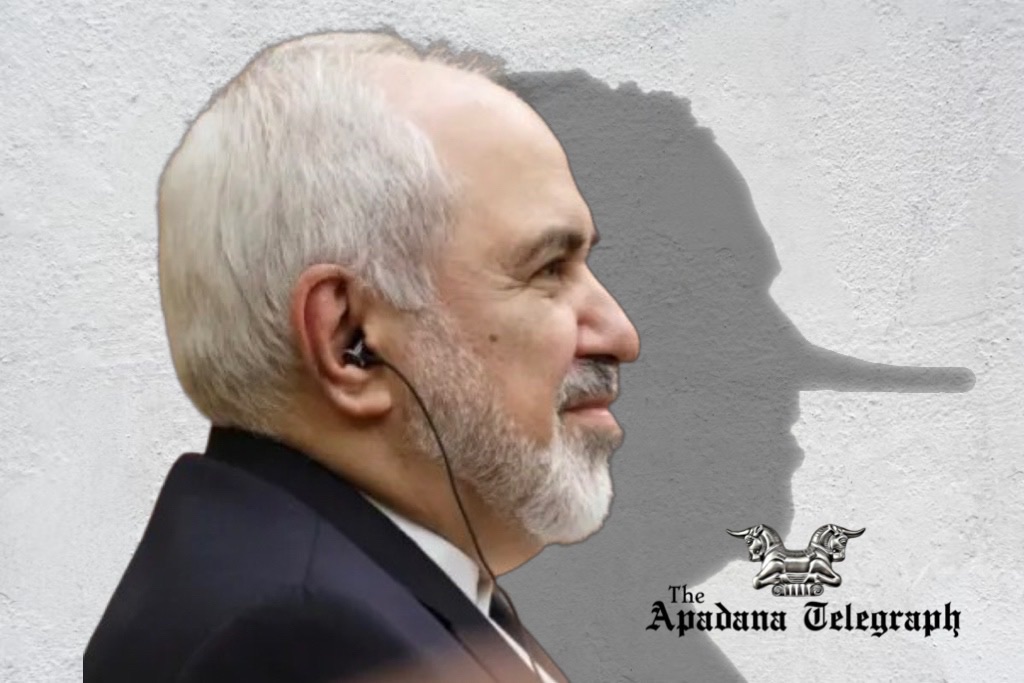
In a recent interview with MSNBC, Mohammad Javad Zarif, the former Foreign Minister of the Islamic Republic regime in Iran and currently serving as Vice President, faced several probing questions that revealed a series of disingenuous answers. As we dissect his responses, it’s crucial to illuminate the established facts that contradict Zarif’s claims and provide a broader perspective on the actions of the Islamic Republic both regionally and globally.
In a recent interview with MSNBC, Mohammad Javad Zarif, the former Islamic Republic Regime foreign minister and current vise President , faced several probing questions that resulted in a series of disingenuous answers. As we dissect his responses, we must shine a light on the established facts that contradict Zarif’s claims and reveal the broader narrative around the Islamic Republic actions on both regional and global stages.
The Islamic Republic Regime’s Alleged Involvement in the October 7 Attack
When asked if the Islamic Republic had any role in Hamas’s attack on Israel on October 7, Zarif emphatically denied any involvement. However, evidence suggests otherwise. A Houthi official confirmed to AFP that there was a meeting in Beirut, attended by Hamas and other Palestinian groups supported by Islamic Republic, where they discussed the expansion of conflicts against Israel (1). Furthermore, Islamic Republic President Ebrahim Raisi congratulated Hamas’s leadership, publicly declaring Iran’s complete support for their actions. This sentiment was echoed by various Iranian officials and state media, who praised the attack as a heroic resistance against perceived oppression (2).
Moreover, reports from the Wall Street Journal indicate that the IRGC had been instrumental in planning coordinated attacks for months before October 7, providing Hamas with tactical military support (3). As stated by Ismael Haniyeh, the head of Hamas’s political bureau, Islamic Republic has provided extensive financial and military resources to the group, making any claims of non-involvement from Zarif appear disingenuous (4).
Breaches of the Nuclear Deal
Zarif was also queried about whether Islamic Republic had violated its obligations under the Joint Comprehensive Plan of Action (JCPOA) regarding uranium enrichment levels exceeding 60%. He again denied any transgressions, laying blame instead on the United States. However, multiple credible sources have documented Islamic Republic’s breaches, including an admission of exceeding uranium enrichment limits discovered by UN inspectors (5). The International Atomic Energy Agency confirmed that Islamic Republic continues to violate key restrictions established in the nuclear deal (6). This reveals a pattern of evasion by Zarif, which undermines the credibility of his assertions.
Military Support to Russia
When questioned about whether Islamic Republic supplied ballistic missiles to Russia, Zarif answered negatively. Yet, other Iranian officials have publicly stated the transfer of missiles and drones to Russia in exchange for agricultural commodities (7). This suggests that Islamic Republic is not only engaging in military cooperation with Russia but is actively pursuing it under the guise of agricultural trade.
Hypersonic Missile Capabilities
On the subject of Islamic Republic’s purported advancements in ballistic and hypersonic missile technology, Zarif again denied any such developments. This statement starkly contrasts with a recent unveiling of an upgraded hypersonic missile by Islamic Republic officials, who touted its capabilities as a significant advancement against Israel (8). Such technological strides highlight discrepancies in Zarif’s assertions and suggest a clandestine effort to enhance Islamic Republic’s military capabilities.
Interference in the U.S. Elections
Finally, when confronted with accusations of Iran’s interference in U.S. presidential election campaigns, Zarif denied any interest or involvement. However, extensive evidence points to Islamic Republic-backed cyber campaigns targeting American political processes (9). Several intelligence reports have confirmed that Islamic Republic has attempted to influence the electoral landscape, showcasing a deliberate strategy by the regime to meddle in foreign affairs.
Conclusion
The responses provided by Mohammad Javad Zarif during the MSNBC interview reveal a pattern of deception, revealing inconsistencies between his claims and the available evidence. From Islamic Republic’s involvement in militant operations to breaches of international agreements, his statements serve not only to mislead the public but also to obscure the Islamic Republic regime’s strategic ambitions. As global observers, it is crucial to critically evaluate such claims and rely on verified information to understand the complex realities of international relations involving Iran.
References
1. Houthi official meeting with Hamas
2. Ebrahim Raisi’s support for Hamas
3. Wall Street Journal on Iranian planning
4. Haniyeh’s acknowledgment of support
5. The Guardian on Iran’s nuclear breaches
6. Defense News on nuclear deal violations
7. Iran supplying weapons to Russia
8. Al Jazeera on upgraded hypersonic missile
9. New York Times on Iranian disinformation


Leave a comment