
Eliot Assoudeh
Civilizational analysis emerged in the field of international relations after the end of the Cold War with Samuel Huntington’s ‘Clash of Civilization’ theory and resonated in the public discourse after the tragic events of 9/11. An approach based on ‘civilizational politics’ would generally investigate the organizing principles that shape international institutions and practices, and help identify actors, and, through social action, turns civilizations into social facts. Nonstate actors, states, and international organizations in the context of civilizational politics are constantly interacting on the assumption that their civilizations exist and that the relationships matter. Actors construct their imagined civilizations, which function as their strategic frame and symbolic power for their domestic and international behaviors.
Almost fifteen years ago, Sadegh Zibakalam, an Iranian political science scholar argued that revisionism is the common characteristics of 20th-century Iranian leaders; both the last Shah of Iran and the current Supreme Leader of Iran have negated the status quo of international order and have perceived Iranian civilization superior to the Western one. He called this pattern an “Iranian Exceptionalism”. Zibakalam does not tell us the Iranian leaders’ approach to civilizational politics is either essentialist – “bounded, coherent, integrated, centralized, homogeneous, consensual, and static” – or non-essentialist – “weakly bounded, contradictory, loosely integrated, heterogeneous, contested”?Are the Shah’s and the Islamic Republic’s imagined civilizations being able to dialogue and peacefully engage with other civilizational narratives or they destined to violently clash and conflict?
The Shah’s ‘Great Civilization’ was based on the White Revolution – series of economic and social reforms (between 1963-1979) resulting in modernization of the state. The Great Civilization’s scope bounded to the nation of Iran and its main objective was domestic politics. The underpinning of the ‘New Islamic Civilization’, on the other hand, is exporting revolutionary values and Shia expansionism. As I discussed somewhere else, the Islamic Republic’s aspiration for the ‘New Islamic Civilization’ aligns with Isaiah Berlin’s Volksgeist, an aesthetic ideology devoid of practical considerations. The scopeof the Islamic Republic’s civilizational politics is foreign policy.The emergence of a Shia hegemonic power is something we may see in the coming years. Because of its ideological roots in nativism, monism, and expansionism, this power will primarily benefit Iran’s local Shia clients as well as those who aim to balance their power by allying with or paying tribute to the Islamic Republic. A new regional order ‘imagined’ by the Islamic Republic, which is predicated on a mythical construction of civilization, will intensify the sectarian conflict in the regionand human rights abuses will increase domestically as a result ofthe regime’s Shia expansionism.
While criticizing the West, ‘Great Civilization’ adhered to cooperation and coexistence with it and saw the Iranian people as a part of the global community. ‘New Islamic civilization’seeks a revisionist agenda and aims to subvert the world order. It is a civilization based on the concept of ‘waiting for the Shia savior’. It has an apocalyptic narrative and considers the people of Iran to have a historical and divine responsibility for the spread of this civilization.
The Shah never claimed superiority of the Great Civilization over other world civilizations and cultures, but the Islamic Republic’s revolutionary elites and intellectuals not only believethe New Islamic Civilization is superior, but also the ultimate aim of humanity. As Mousa Najafi, a university professor and head of the Islamic Culture, Civilization & Revolution Department at the Institute for Humanities and Cultural Studies, in his book The Superior Civilization argues, the ultimate and maximum degree of liberty is the cultural aim for the West, and progress stops when this objective is reached. However, Islamic culture views growth as never-ending as the ultimate aim is for a person to transcend to a godlike figure.
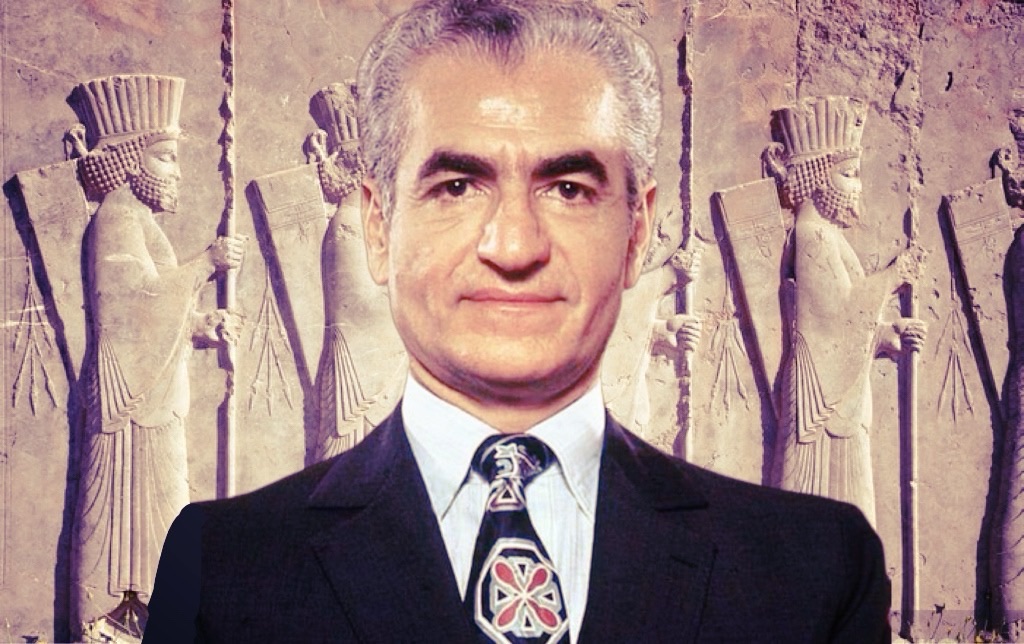
Mohammad Reza Pahlavi, the Shah of Iran:
“The Great Civilization means a civilization in which the best elements of human knowledge and vision shall have been employed to ensure the highest standard of material and spiritual living for every citizen; in which the new achievements of science, industry, and technology shall have been combined with high moral values and with the most progressive standards of social justice. It means a civilization built on the foundations of creativity and humanity, where every human being shall enjoy not only material welfare, but also the highest degree of social security, and possess eminent spiritual and moral virtues.
To attain this goal, we shall, in keeping with the universal outlook that characterizes our country, combine the best ingredients of our civilization and culture with the best elements of the world civilizations and cultures, avoiding prejudice, fanaticism, and short-sightedness.
We must not be slavish imitators of the West, nor must we be hostile to the West or modernism.… Nevertheless, Western democracy in its principles is the most progressive governmental and social system.”
Seyyed Ali Khamenei, the Supreme Leader of the Islamic Republic:
“The Iranian nation should pursue the construction of the New Islamic Civilization for humanity. This is fundamentally different from the way great powers perceive humanity and act upon it; This does not mean colonization; This does not mean violating the rights of nations; This does not mean imposing our morals and culture on other nations; This means offering a divine gift to the nations, so that the nations can choose the right path at their discretion, by their own choice, by their will. The path that the powers of the world have led the nations to date is the wrong path and the path of misguidance. This is our [Iranian nation’s] duty today.
Let’s not seek to imitate the West.… Western culture is an aggressive culture; Wherever it enters, it re-orders societies; It destroys the identity of nations.
The real civilization for our people is Iranian civilization; It is a civilization that belongs to us; It is based on Iranian talents, and it is intertwined with our [Islamic-Iranian] way of life.”


Leave a Reply